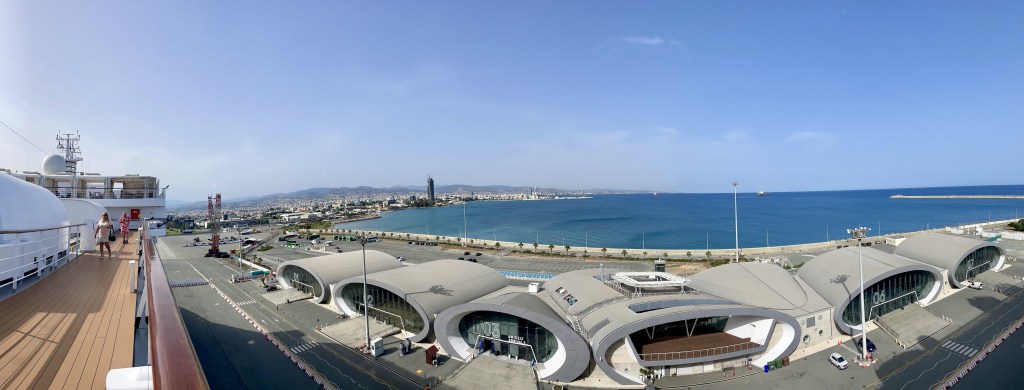
Limassol is the second-largest city in Cyprus and the first place we set foot in the island country.
Cyprus is north of Egypt, just south of Turkey and not very far west of Lebanon and Syria, so you can imagine how excited Bill and I were to be exploring this part of the world.
In the brief time we spent there getting off of and back onto our cruise ship, Limassol struck me as looking like a lot of large coastal cities. But our sightseeing destination for the day, the town of Paphos, was nothing like any city I’d visited before.
Paphos was 30 miles down a pretty coastline, a short trip in a big motorcoach that drove us there and to the entrance to Paphos Archaeological Park. I’ve been in state parks, national parks and some serious museums, but I’ve never been in an archaeological park. In this part of the world where the history of Western Civilization began, it was amazing to see that history is still being written by way of archaeology that continues to this day.
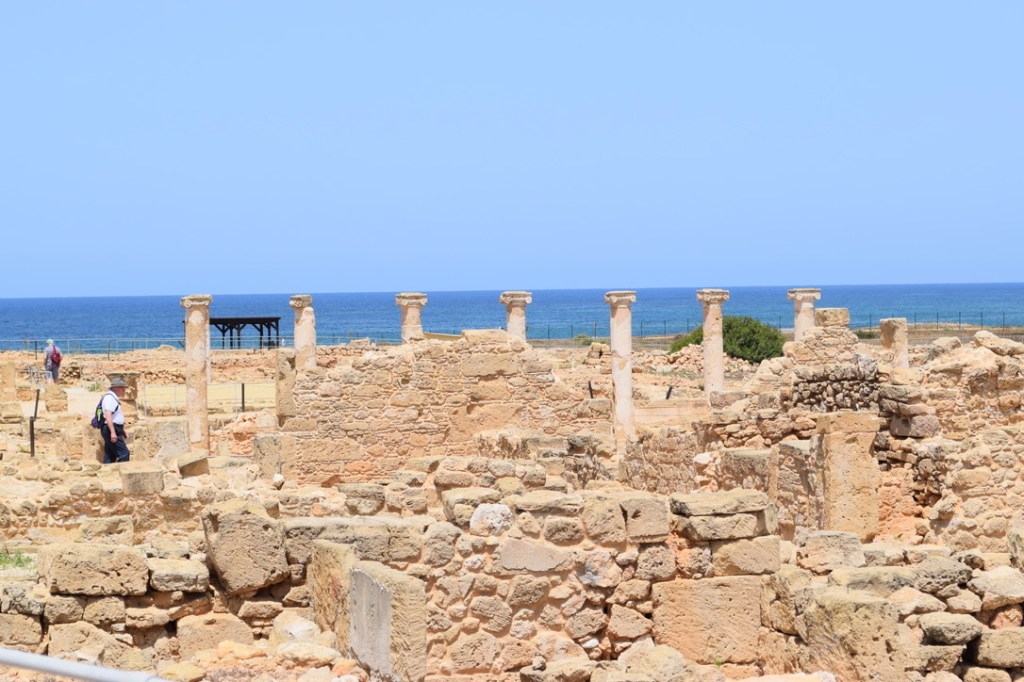
The Paphos Archaeological Park is essentially an open-air museum with remains of an ancient Greek and Roman city and is a UNESCO World Heritage Site.
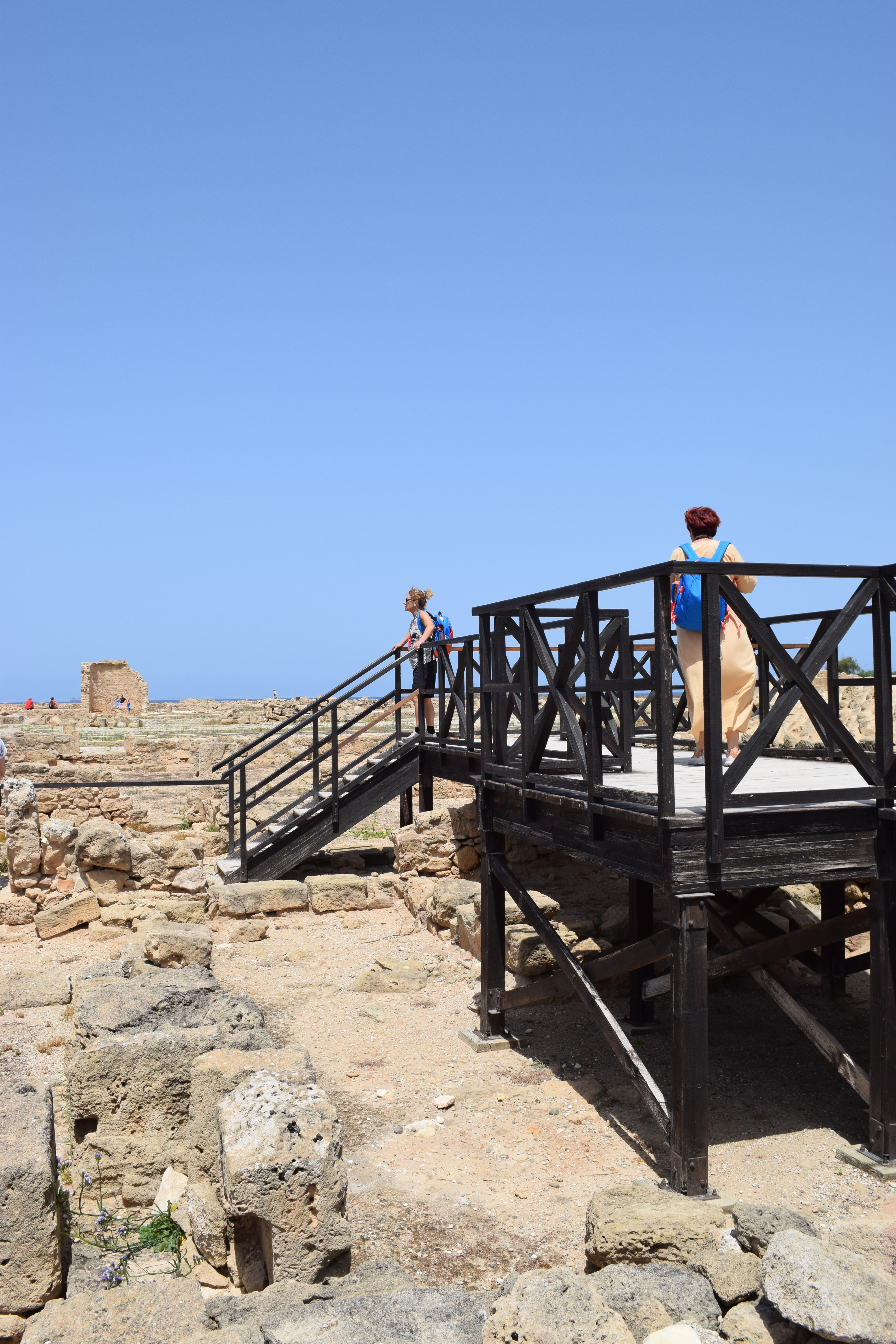


Its contents date to prehistoric times and include villas, palaces, theaters, fortresses, tombs and an amphitheater. Its best-known ruins may be mosaics from the years 100-300 AD in what’s called the House of Dionysus. Dionysus, the Greek god of wine, “pleasures” and theater, is one of the 12 gods that are part of Cyprus’ history. The House of Dionysus belonged to a wealthy citizen of the then-Roman empire.


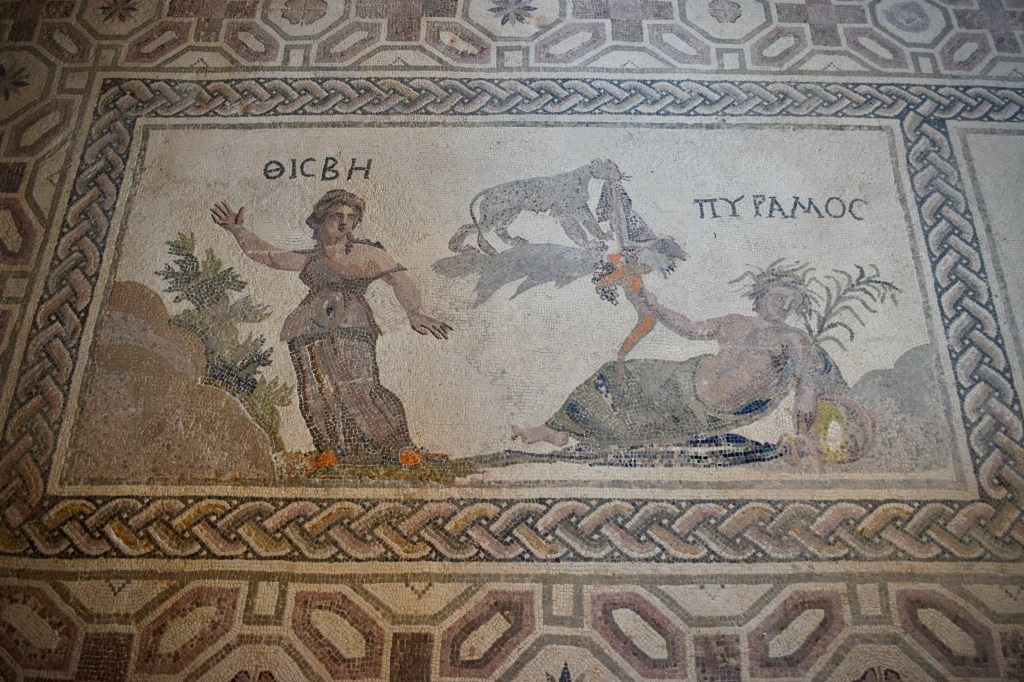


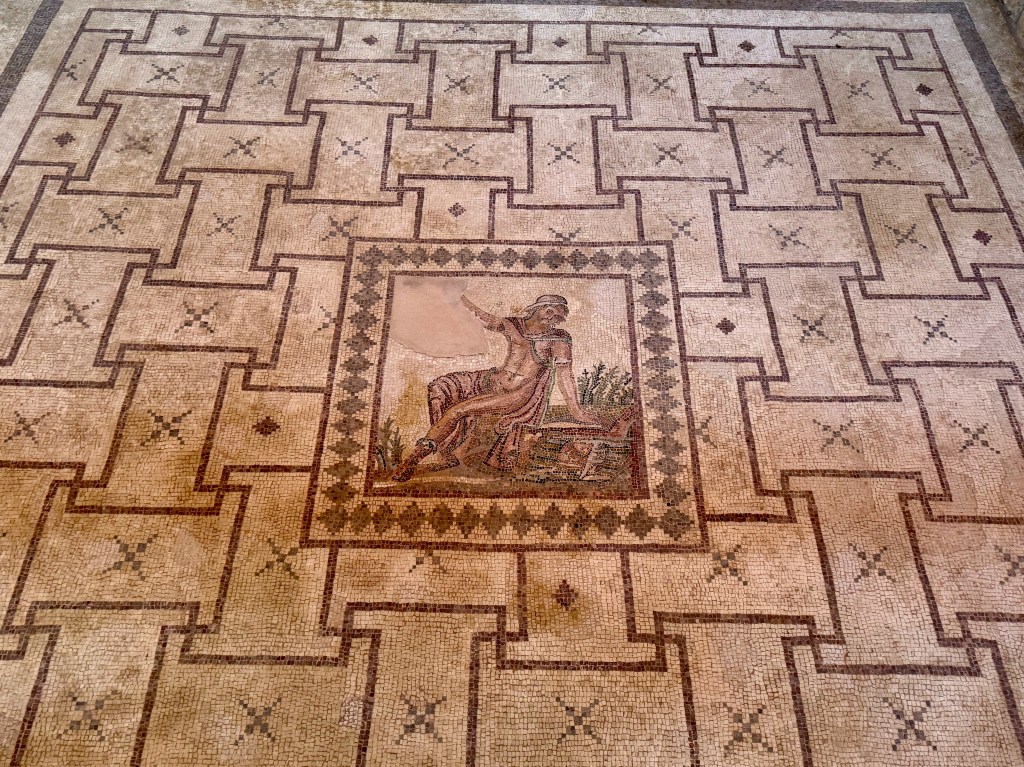
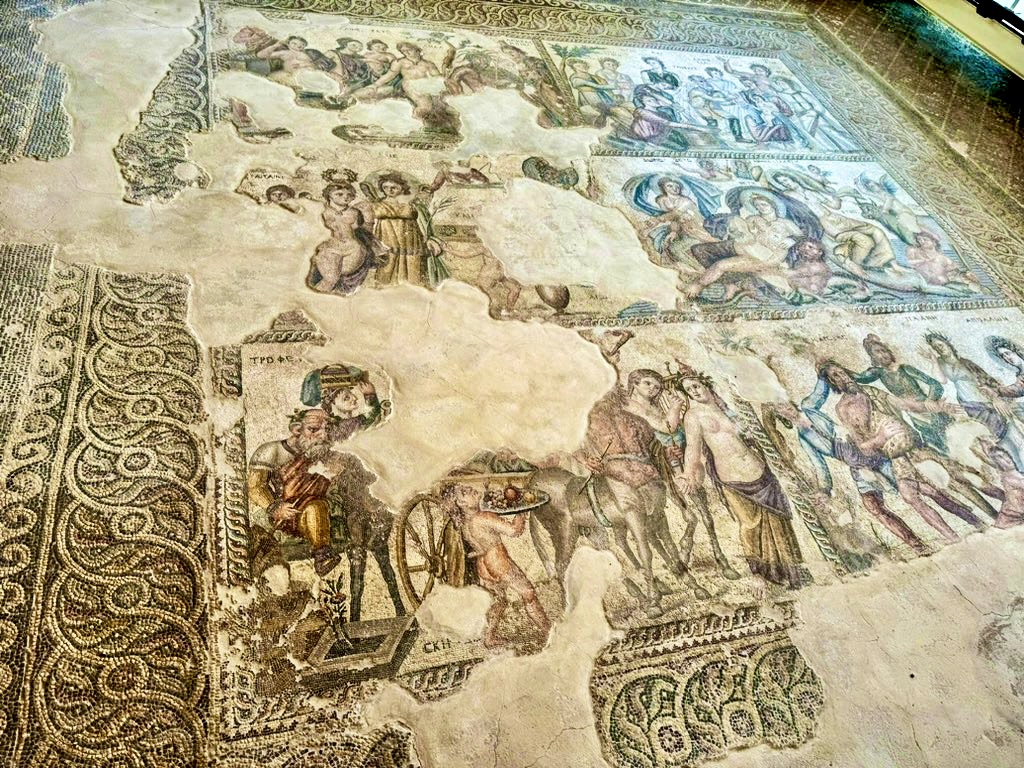
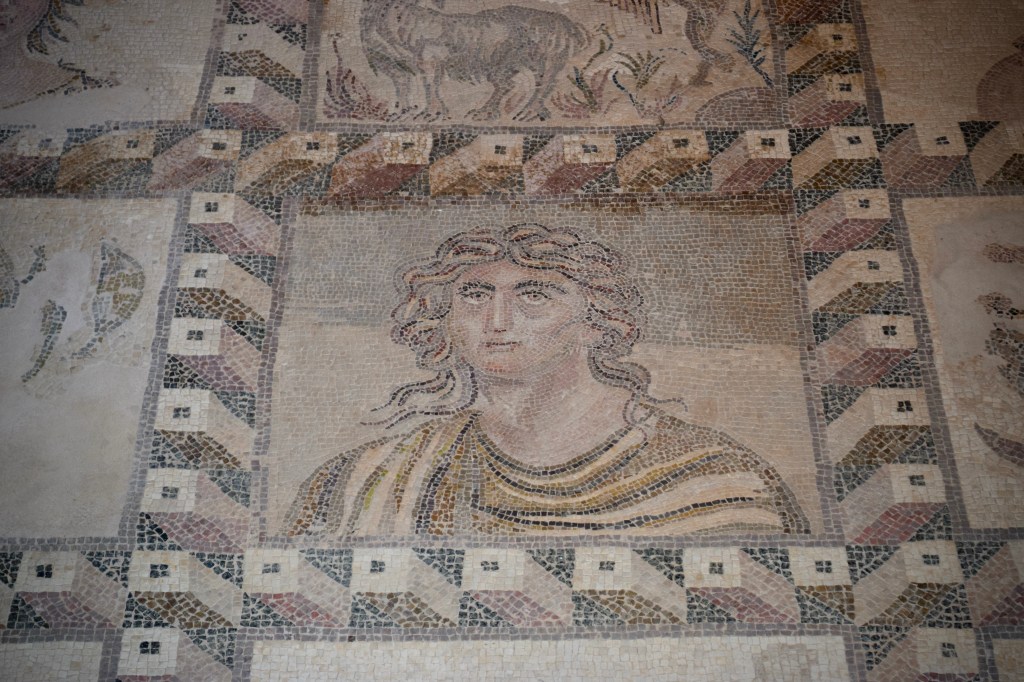
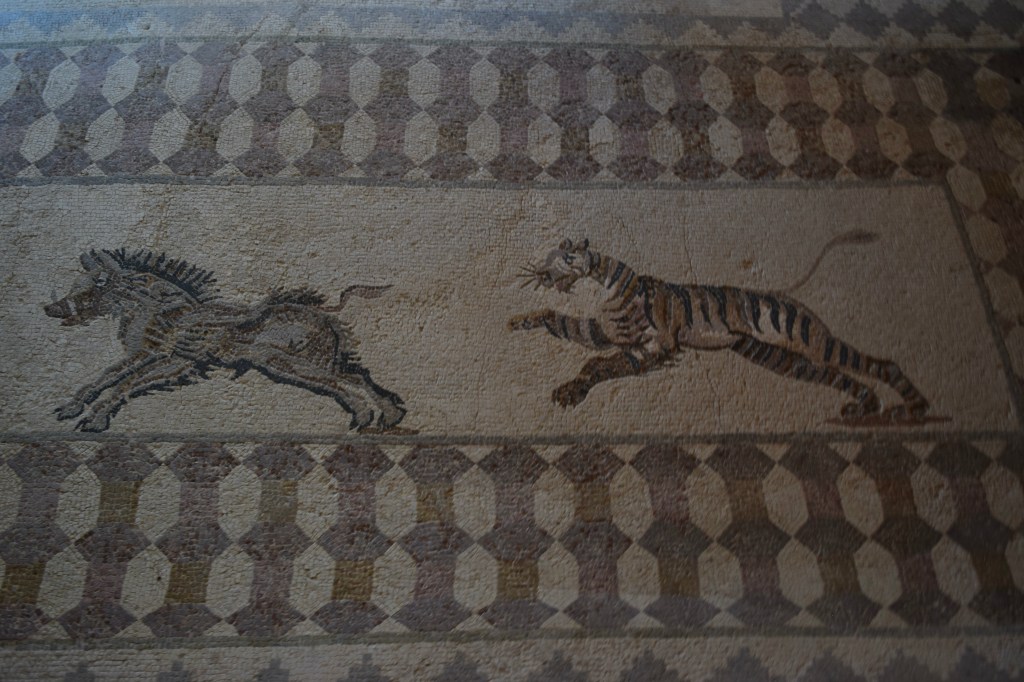


The mosaics depict scenes from Greek mythology, Greek gods, goddesses, heroes and everyday activities. Think of them as stone photos that are about 2,000 years old. They were discovered in 1962 when a farmer’s plow unearthed one. The park is still under excavation.
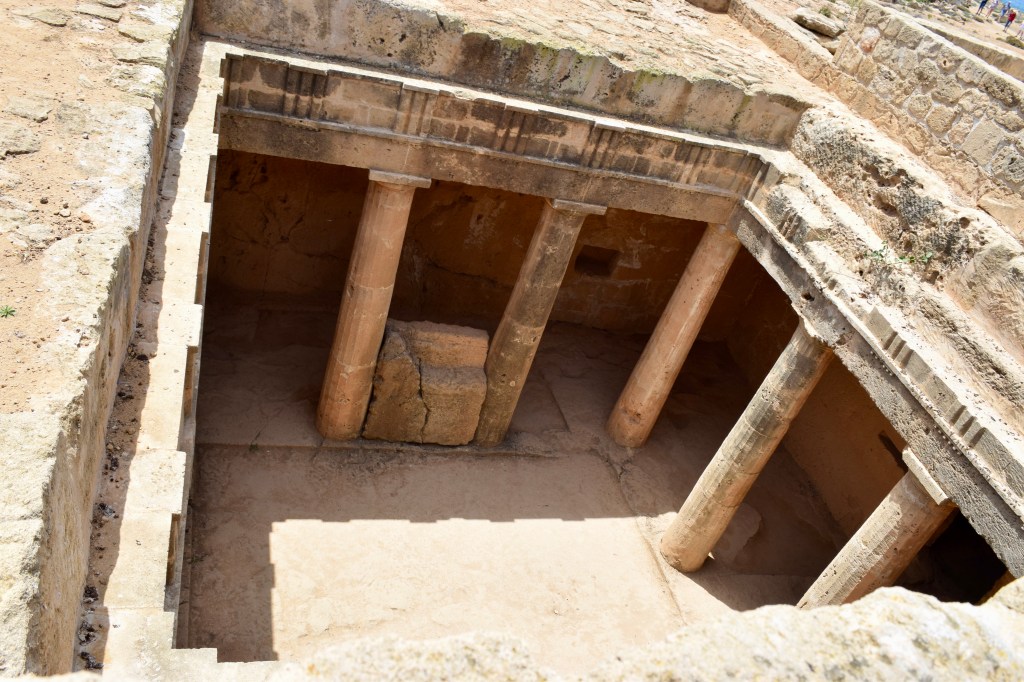
Among other ruins we visited at the site was the “Tombs of the Kings,” a thoroughly excavated former burial site.
You know who else visited Paphos? A long time before we did? The apostle Paul.
The account of his visit is in the New Testament Book of Acts, Chapter 13, verses 1-12. To summarize, Paul and Barnabas were sent from Antioch to Cyprus, where they visited Jewish synagogues in a town called Salamis before traveling all around the island and, ultimately, ending their time on Cyprus in Paphos. There, some dramatic events went down that included converting the Roman governor to Christianity.
There are no markers to indicate where any of the above took place, but we did get to visit a house of worship dating back to the 9th century AD: the Byzantine Agia Paraskevi Church.
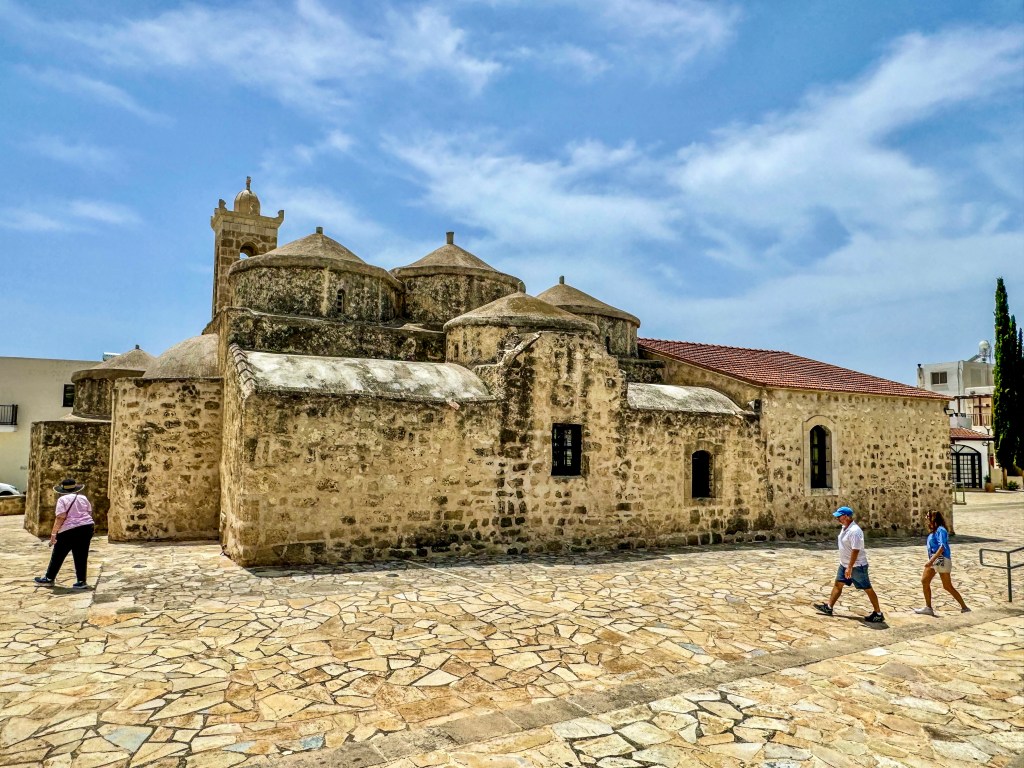
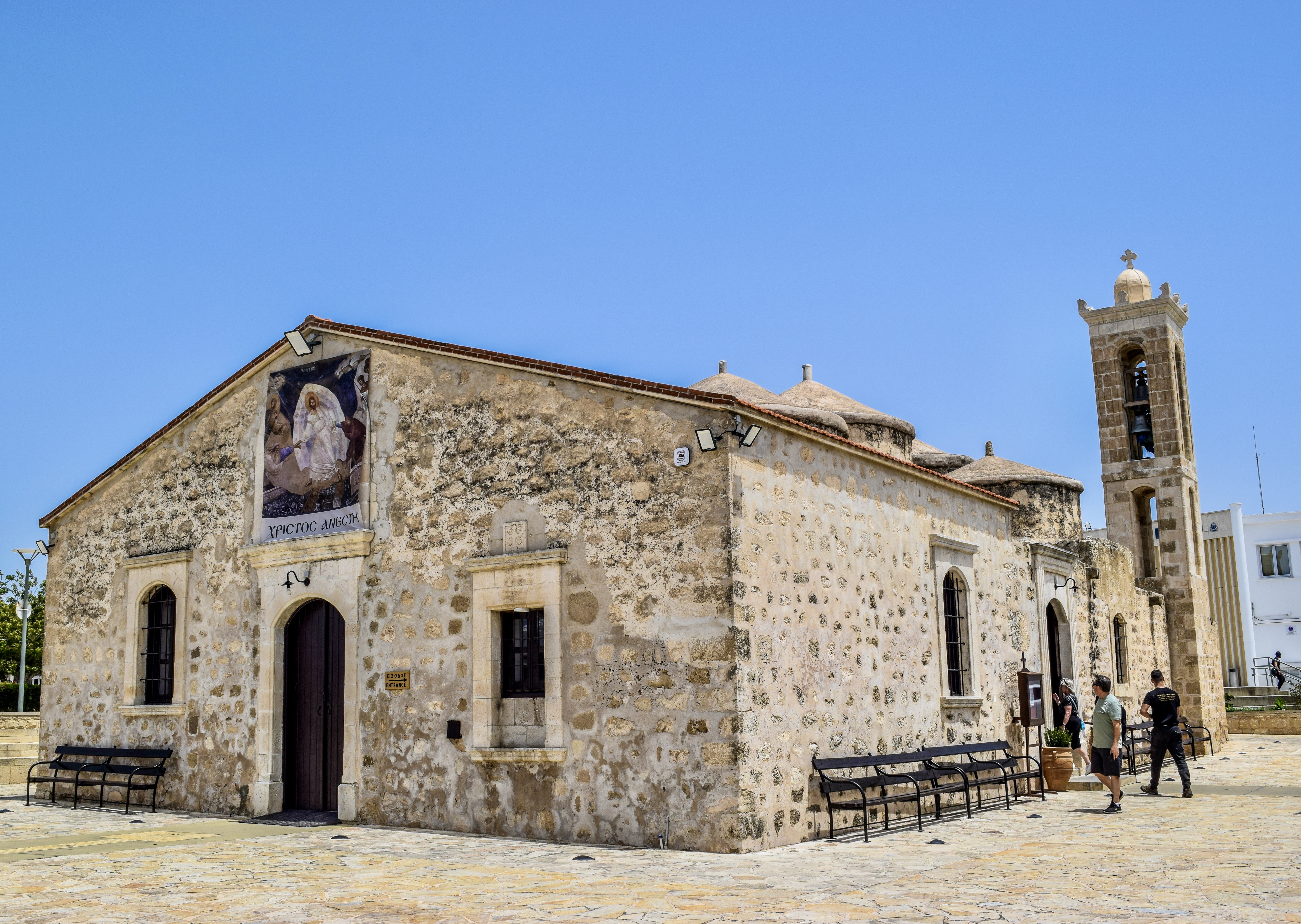
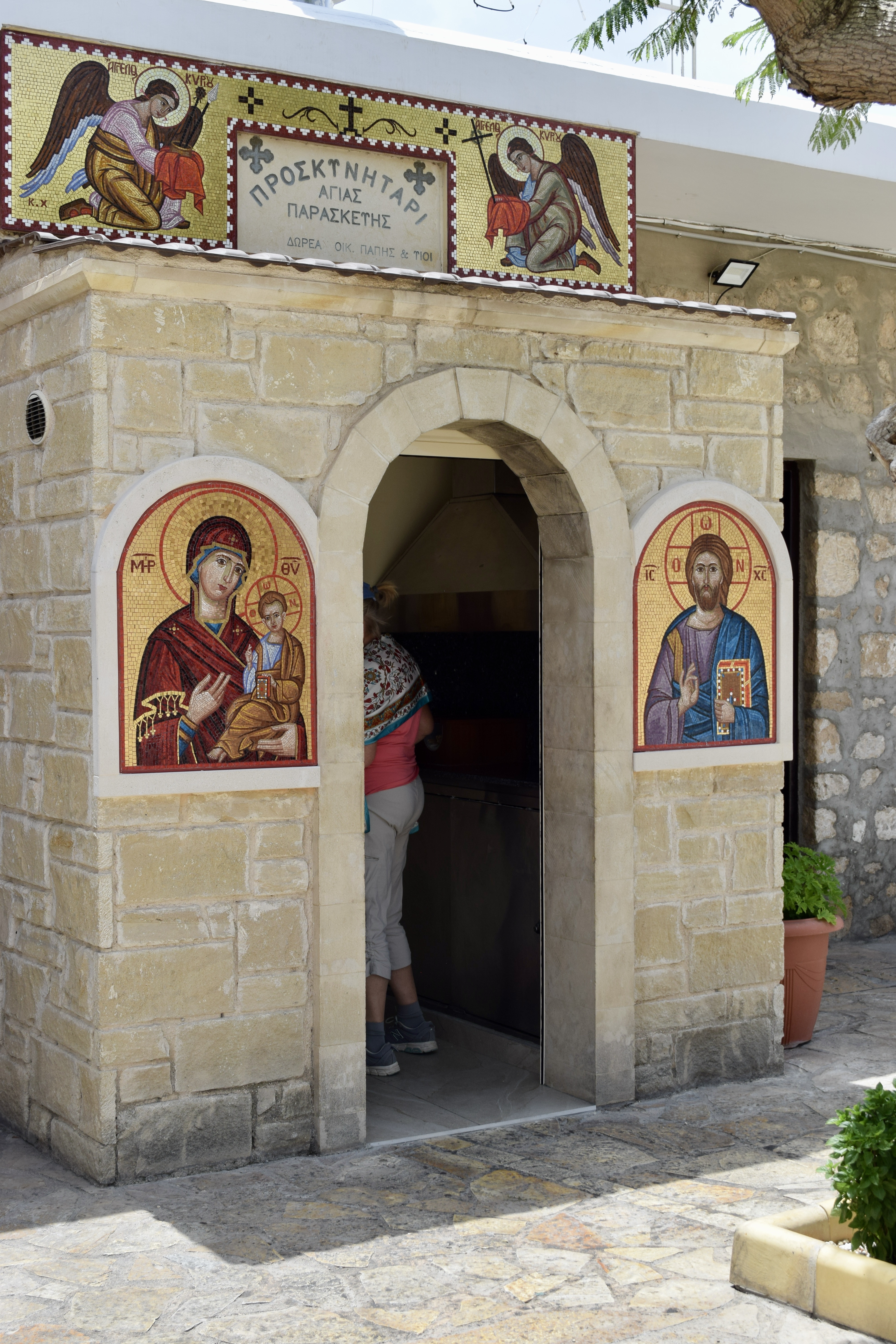


Of course, it’s impossible to visit Paphos and not also hear about the island’s connection to the Greek goddess of “love,” Aphrodite. The name is where we get the word aphrodisiac. According to Greek mythology, Aphrodite ended up at Paphos after she rose from the sea just down the road. We even got a peek at “Aphrodite’s Rock,” a landmark at “Aphrodite’s Beach” pointed out as where she was born in the sea foam. The motorcoach pulled over at the picturesque stop on our way back to Limassol.

Afterward, dazzled by beauty and wonders of the ancient world, we sat back to relax on the short trip back to the port. Then came an event that wasn’t on the itinerary. The bus broke down. Bill and I didn’t think it was a huge deal because we didn’t have far to go, and we ourselves hadn’t really observed anything amiss from our seats in the first few rows of the bus.
Apparently, it was a different situation further back, especially in the seats closer to the bus’ rear wheels. Passengers seated there wasted no time getting to the front and off the bus when it stopped. Our guide, the most laid-back of guides, gently began telling the rest of us that we needed to exit the bus. Bill and I did as asked, but we still weren’t aware of a problem. Once we stepped onto the shoulder of the expressway where the bus had pulled over, we did smell something like burned wires or overheated brakes. Our guide calmly reassured us all that a replacement bus was on its way and expected within minutes.

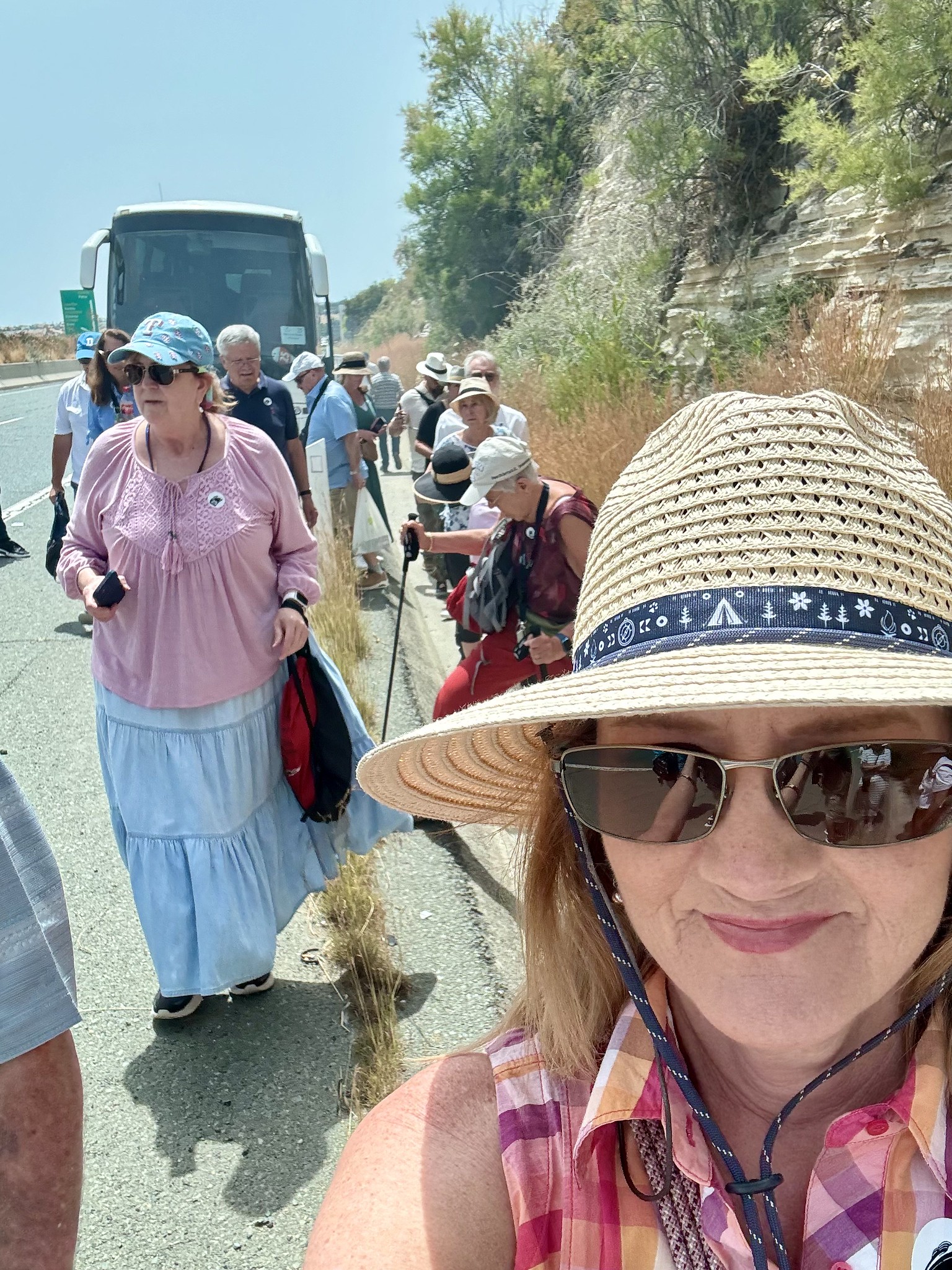
Left: looking away from the bus as we stood behind it. Right: looking toward the bus and our fellow passengers disembarking behind us.
* * * * *
We stepped toward the back of the bus to make room for others exiting. That’s where we learned about the concerns of those who had been seated toward the back. One of those was a very agitated female passenger who said she smelled smoke and was concerned something was burning even as the bus was in motion. Then, she urged her two companions to join her in walking farther—and farther—from the bus, observing that standing nearby wasn’t smart in the event fire was about to break out. I felt bad for how upset she had become, but I thought the 20 feet or so Bill and I were from the back and outside of the bus was sufficient.
Sure enough, the fresh replacement bus was there before we’d had time to do much more than laugh at what an unlikely, unexpected development this was.
Safely back—in only about 10 minutes—at the big harbor in Limassol, Bill and I took a quick spin through a souvenir shop. The wide selection included “Aphrodite’s Delight,” a locally made candy in a variety of flavors, but we’d already stocked up in Paphos. I’m no geopolitical expert, but even I knew the folly of a fellow shopper’s question to the cashier, “So, this is like ‘Turkish Delight,’ right?”
“No, it is Aphrodite’s Delight,” the cashier replied with irritation, “and this is Cyprus, not Turkey.”
A little sharp, yes, but there is some recent history that might leave Turks not fondly regarded in Cyprus. A Greek military coup in 1974 aimed to unite Cyprus with mainland Greece, but instead led to a Turkish invasion and the division of the country into the Turkish Republic of Northern Cyprus (recognized today only by Turkey) and the Republic of Cyprus. Limassol is not in the area claimed by Turkey.

The customer asked the cashier again, “But Aphrodite’s Delight, it’s similar to Turkish Delight, right?”
“It is Aphrodite’s Delight,” the cashier said, “but yes, the idea is probably the same.”
 wordsandpictures.blog
Leave a comment