Just one day in Turkey took me farther than I’d ever been from home.
On top of that, after our visit to the town of Alanya—a pretty resort area also known as the “Turkish Riviera”—Bill and I now can say we’ve been on the Asia part of the world map. It happened on the third day of our once-in-a-lifetime cruise around the Aegean sea, when we woke to our ship gliding to the gentlest of stops beside a long pier stretching out into transparent turquoise water.

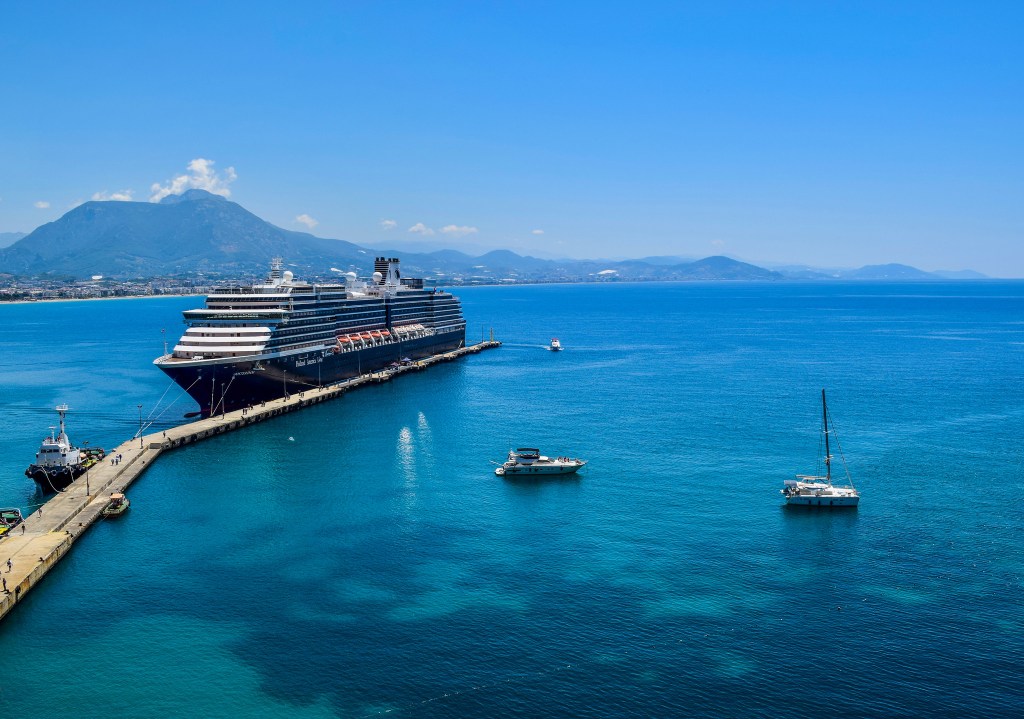
Bill brought me coffee from breakfast (which I would eat more often if it weren’t so often served too early in the day for me), and we went out on the balcony of our cabin and looked up at the steep terrain dotted with tile-roofed buildings, minarets and the Turkish national flag.
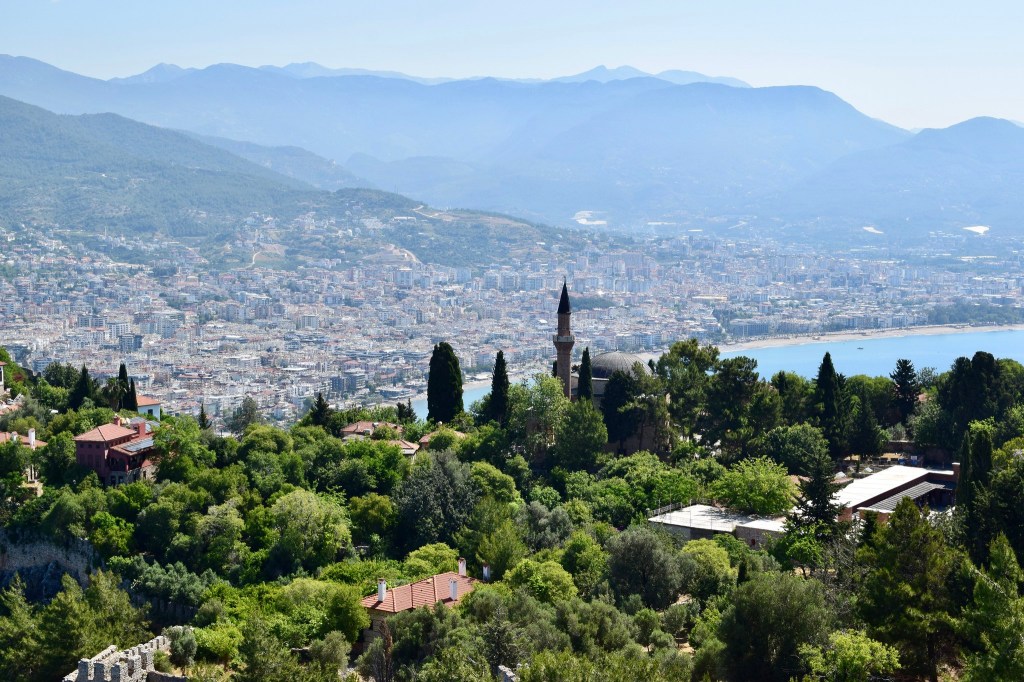
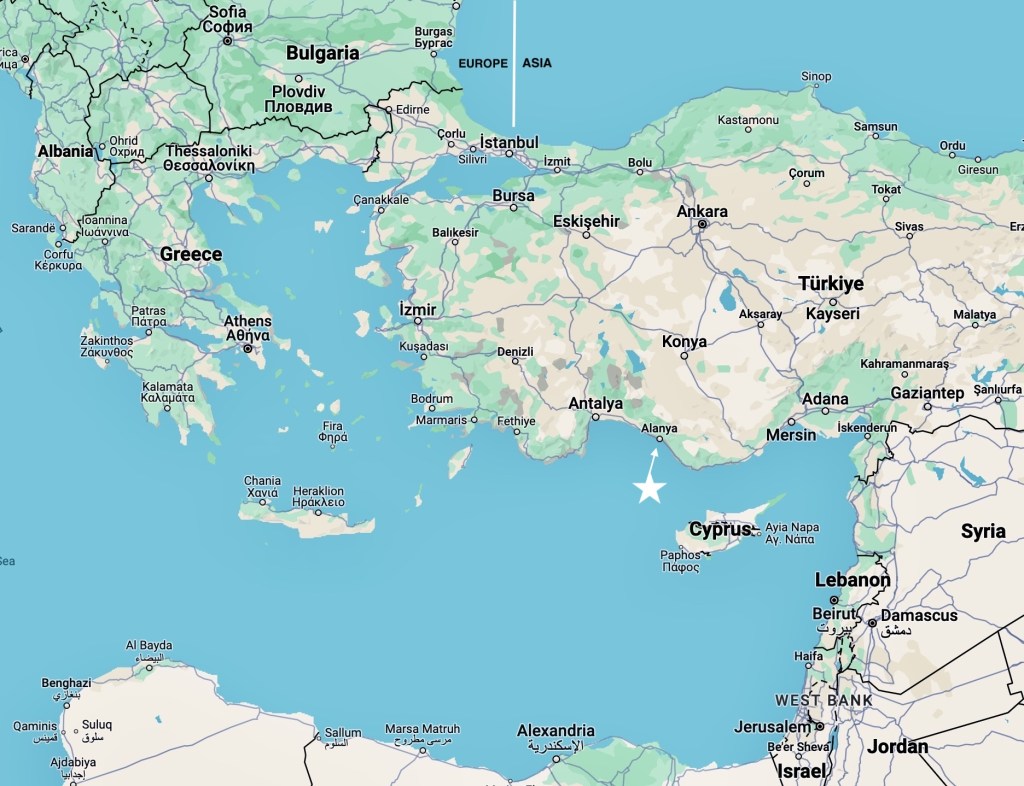
Alanya is on Turkey’s central Mediterranean coast and its Southern border.
On the map, almost all of Turkey lies in Asia up to Istanbul, which is famous for straddling the line between Asia on the east and Europe to the west. Five hundred miles to the south and some to the east of Istanbul, Alanya is firmly in Turkey’s Asian territory. But you know what? I’m not sure you’d know the difference if you were just tooling around from west to east in Turkey.
From our ship, we walked the quarter-mile long pier and past the “Red Tower.” That name came from the color of the bricks in the 10-story, 100-foot diameter, octagonal stone-and-brick medieval fortress built around the year 1200.

The Red Tower looks out on wide, hotel-lined beaches leading into the clear, blue Mediterranean, like the one below.

There’s even a “Cleopatra Beach,” named for guess-who-swam-there? We didn’t make it to that one.
We had a bus to catch to the very tip-top of the city, Alanya Castle, three miles of hairpin turns climbing 1,000’ to a fort turned open-air museum. The castle sits on a rocky bluff looking down on the Red Tower and today includes churches and chapels from the Byzantine Empire and the “Süleymaniye” mosque built in the 13th century.
The site also includes remnants of Byzantine and Roman-era forts from 200 BC, and evidence of those remains in the shape and style of some of the structures.
No surprise, ocean views from the castle grounds are incredible.

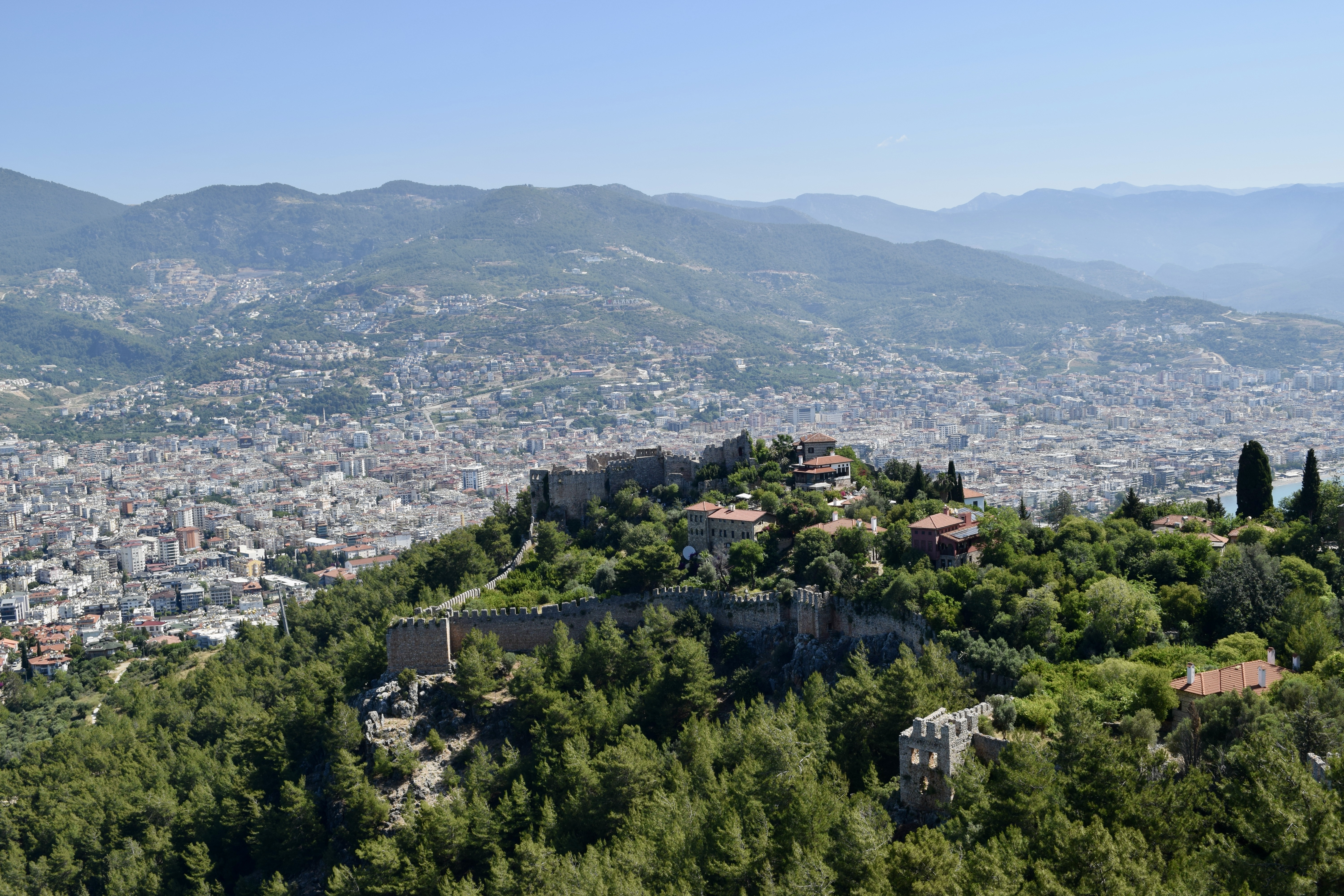


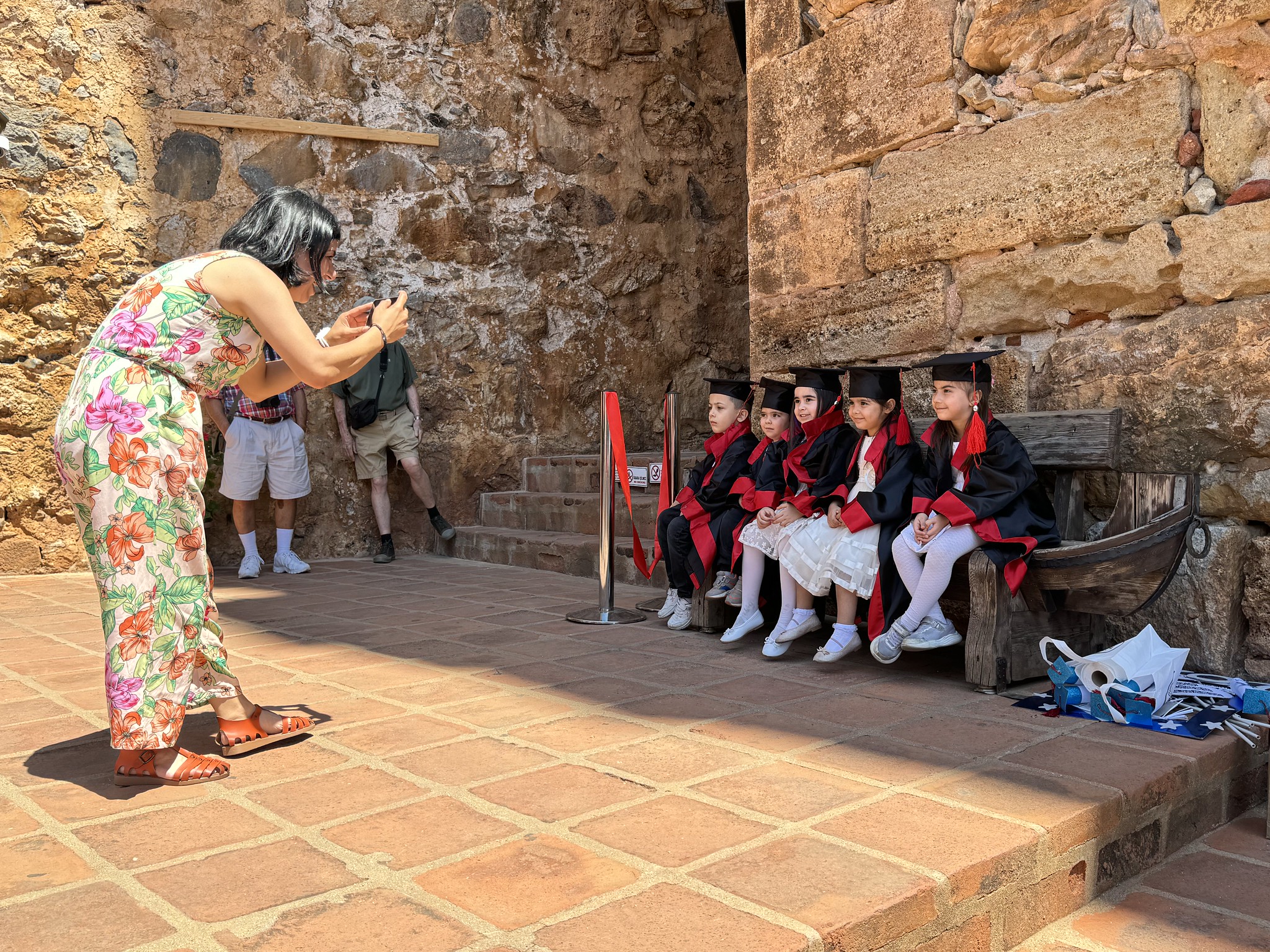
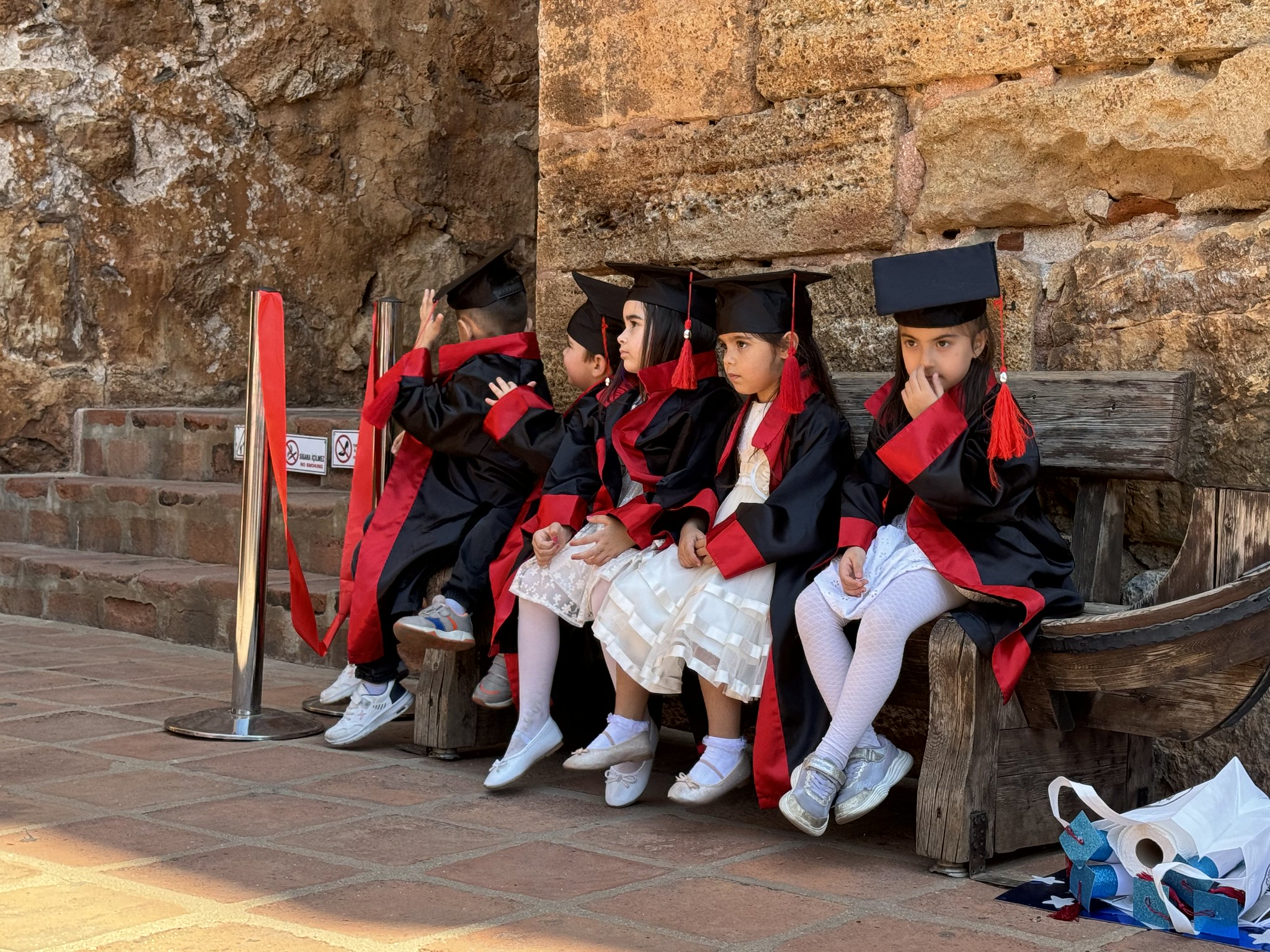
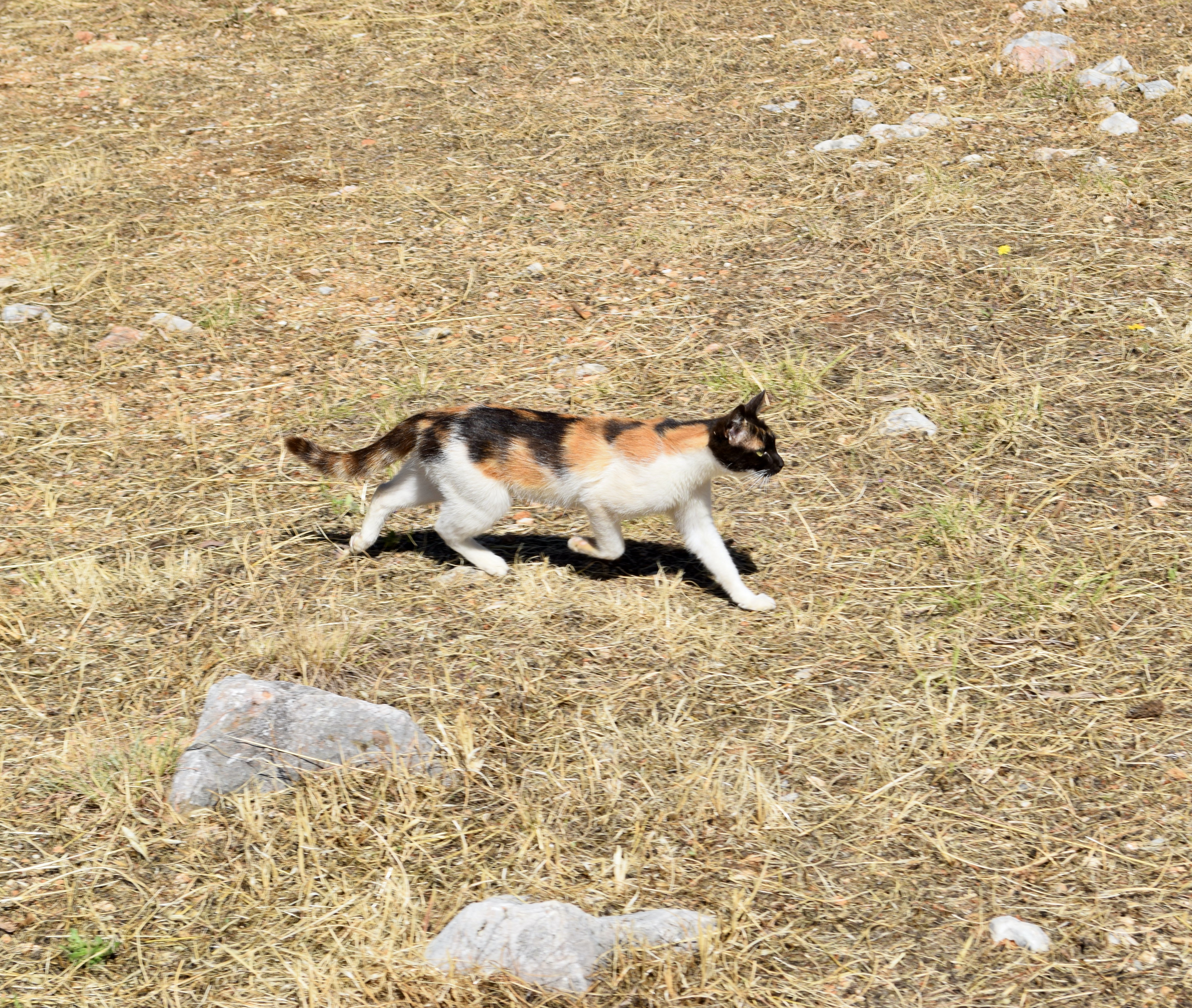
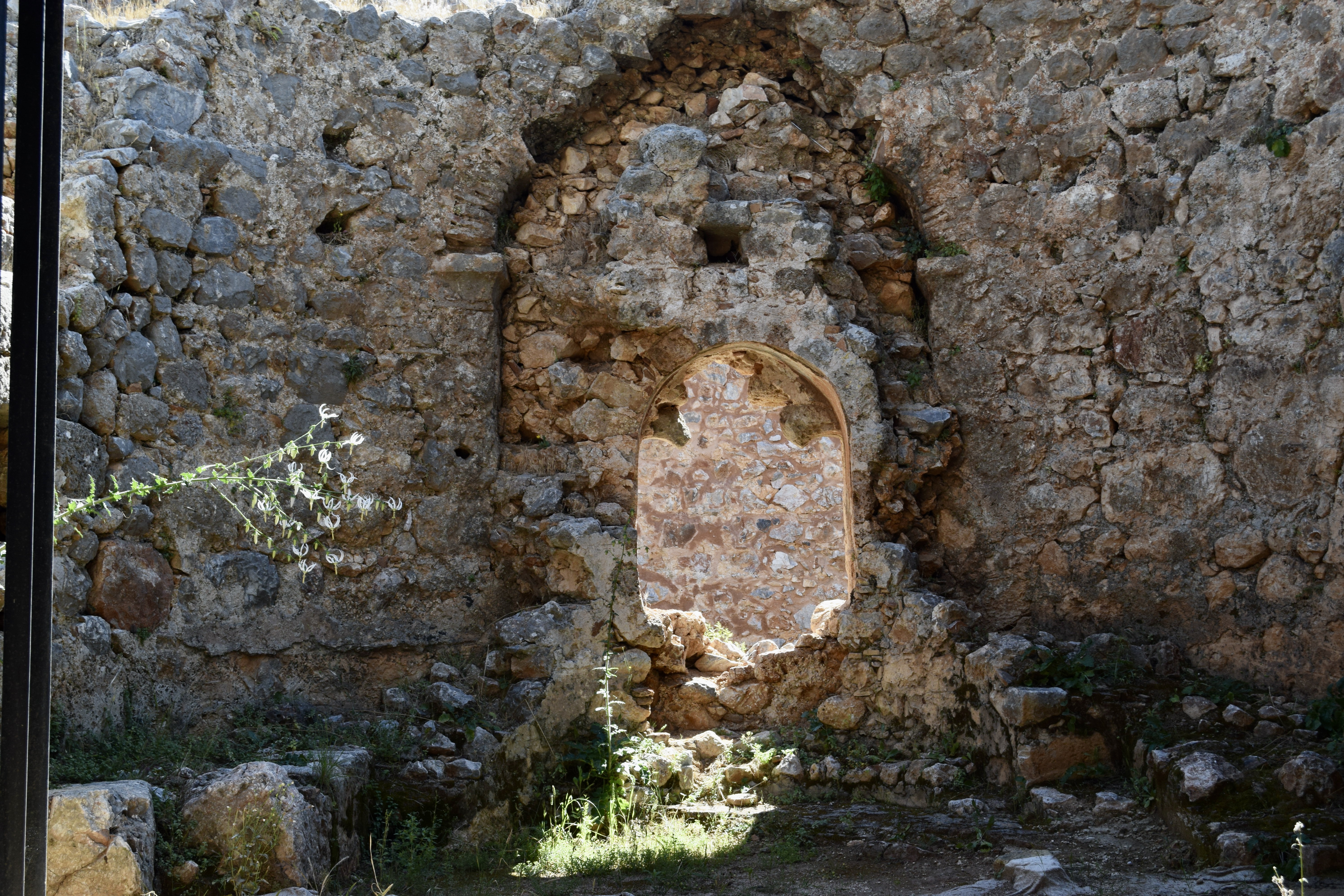
Above: All views from Alanya Castle…including of Cleopatra Beach and of a group of kindergarten graduates from one of several small schools operating on the grounds.
The rocky peninsula the place is built on protects it on three sides. The fourth side has a pretty good protective barrier in a massive stone wall that is four miles long, 40 feet thick, 100 feet high and has 140 individual towers.
The Red Tower below could hold as many as 2,000 people, and those it held helped watch for pirates or hostile forces aiming to reach the castle. Around the eight sides of its open-air top are narrow openings that protected archers—back when arrows were a weapon of choice—or enabled pouring “boiling resin” or “boiling water” from above down on unwelcome visitors below. As I read this and that the tower’s 13th-century architect was an expert brought from Syria, I was reminded again of the connection of this place to worlds so far back in time and how far it is in distance from where we live in the present.
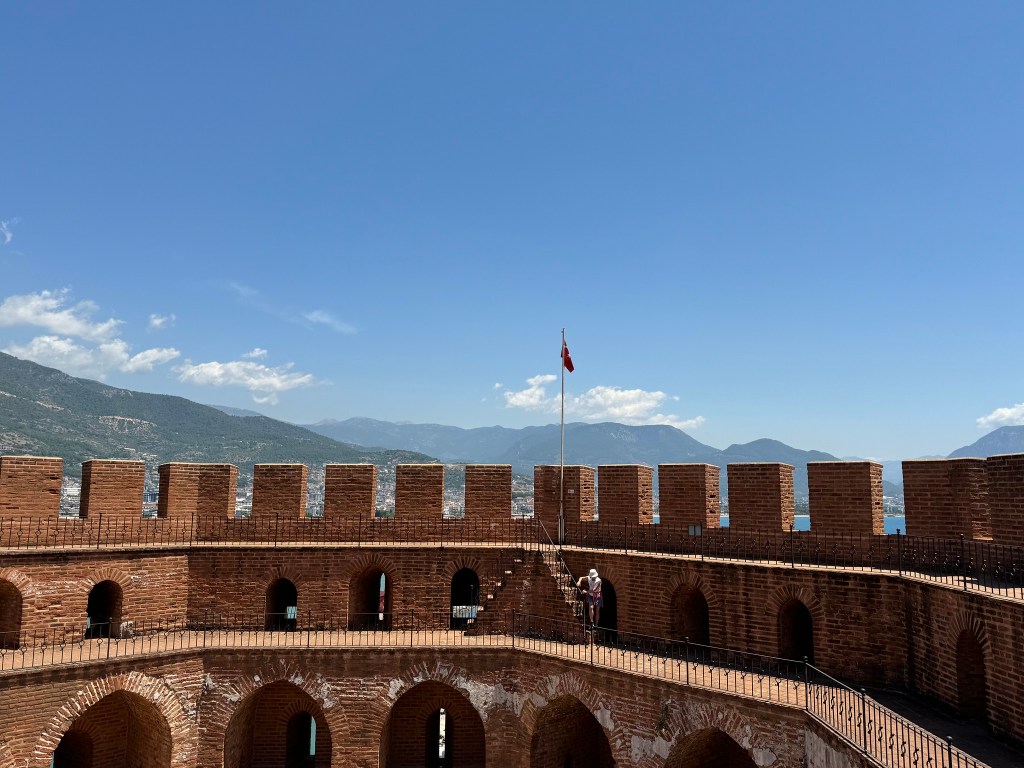

After taking in the historic highlights, we took in the Alanya waterfront. It was a beautiful day in this beautiful place.
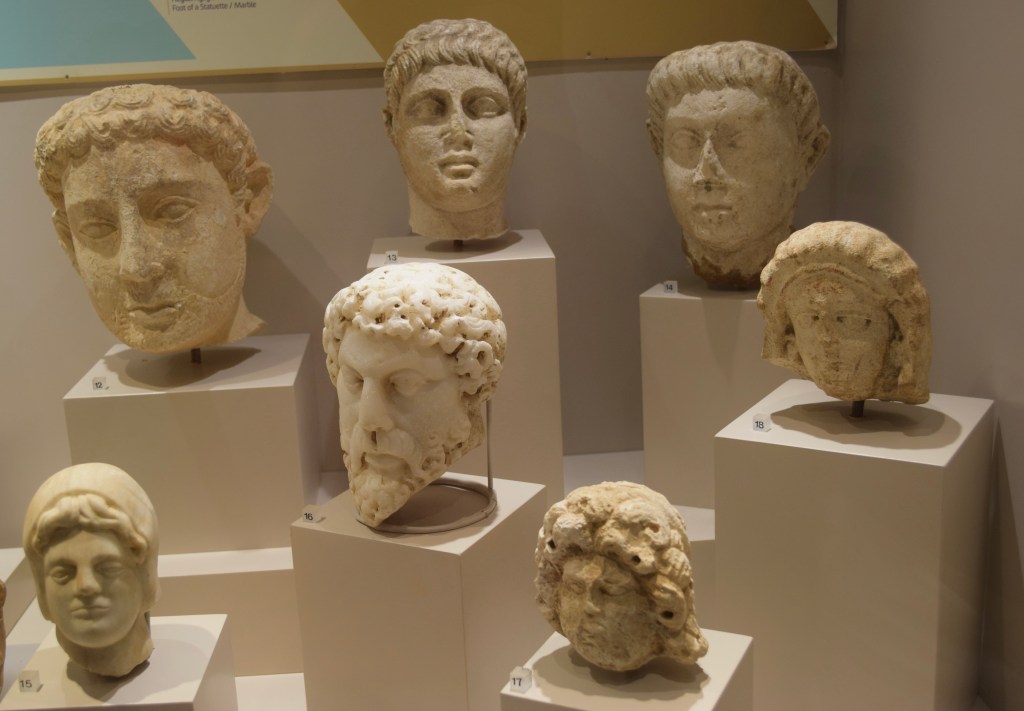

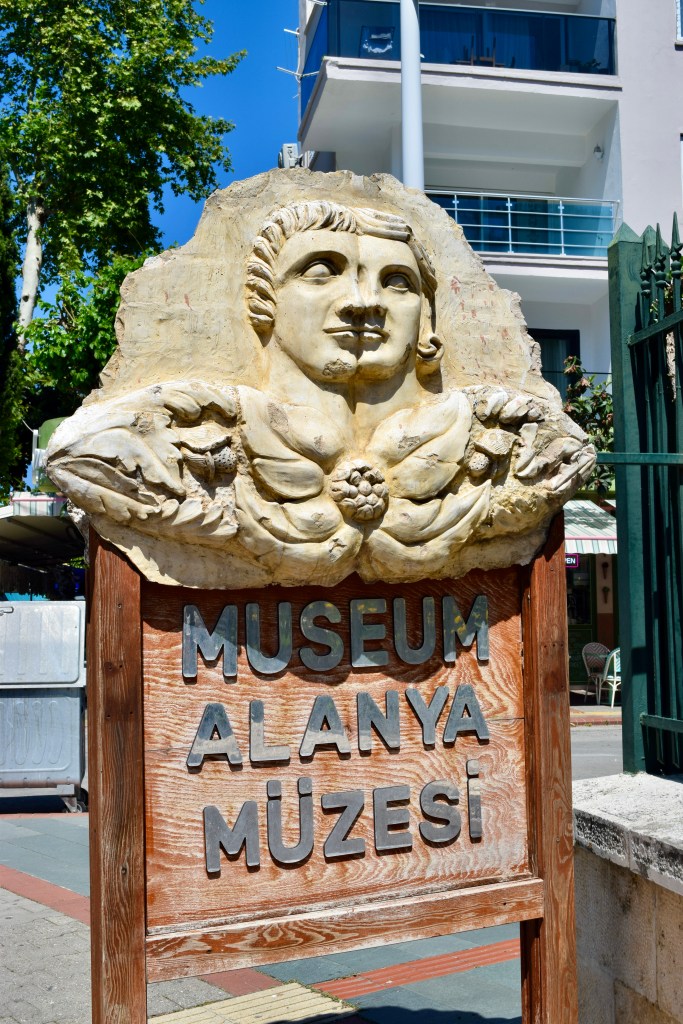


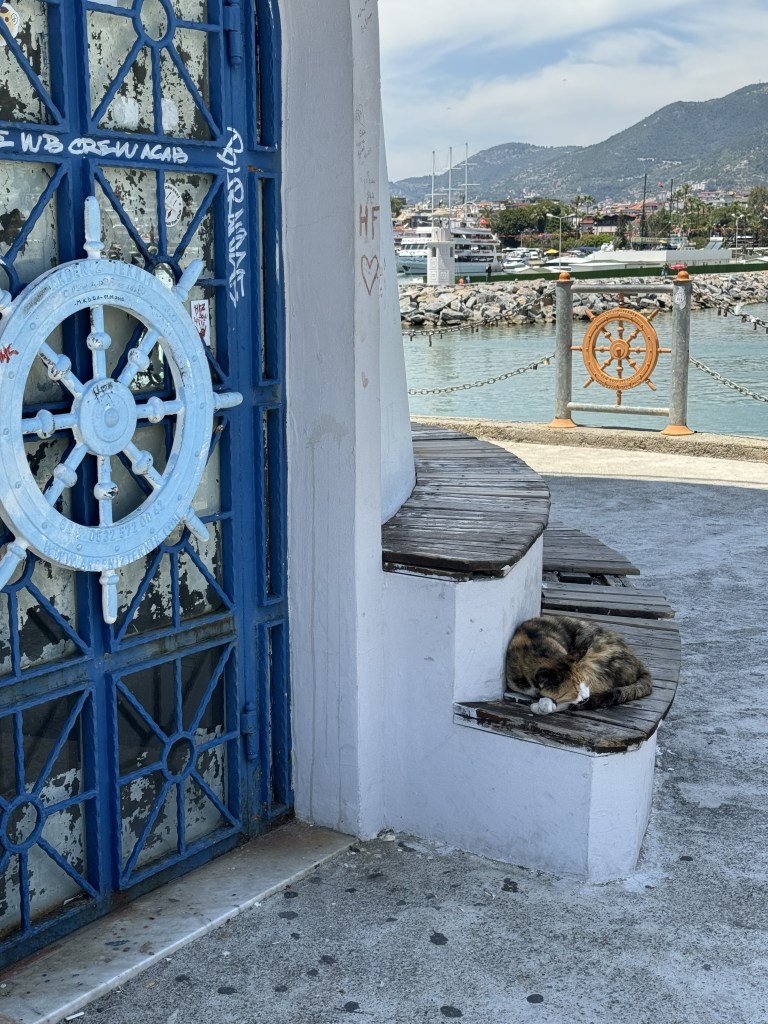
The very few souvenir shops reminded me we were in a popular tourist spot. The very many sunny, outdoor spots for relaxing under an umbrella and in a gentle ocean breeze reminded me that we were in a beautiful seaside town.
The sounds of Turkish—among other languages—being spoken and of Islamic calls to prayer emanating from minarets reminded me this wasn’t just a place far from anywhere I’d been before. It was a place much different from anywhere I’d been before. I saw a world of very different interests and influences co-existing beautifully.
It’s beautiful, exotic, and I’ll stay much longer if I ever get to go back.


 wordsandpictures.blog
Leave a comment