Funny thing about the Greek island of Rhodes: Among its many claims to fame is one of the Seven Wonders of the Ancient World. Only that Wonder hasn’t existed since the year 225 BC.
Sure, I’d heard of the Colossus of Rhodes, but I didn’t realize it’s been gone for 2,250 years. You’d have to be pretty colossal to be declared a wonder of the world, I guess, not to mention something people are still talking about 21 centuries later. Including marking the spot where the Colossus, a bronze statue a little taller than the Statue of Liberty, is believed to have stood. After 12 years to build this depiction of Helios, Greek god of the sun, the Colossus lasted only about 60 years. Until it was brought down by an earthquake.
The morning after we boarded a cruise in Athens for a seven-day trip around the Aegean Sea, our ship made its first stop in the port of the city of Rhodes Town, on the Island of Rhodes.
Bill and I had an offboard excursion, a full day of transportation across the island to the ancient–there’s a lot of ancient in Greece–fishing village of Lindos. The drive via motorcoach was only about 30 miles, so we had plenty of time to spend on several planned stops.
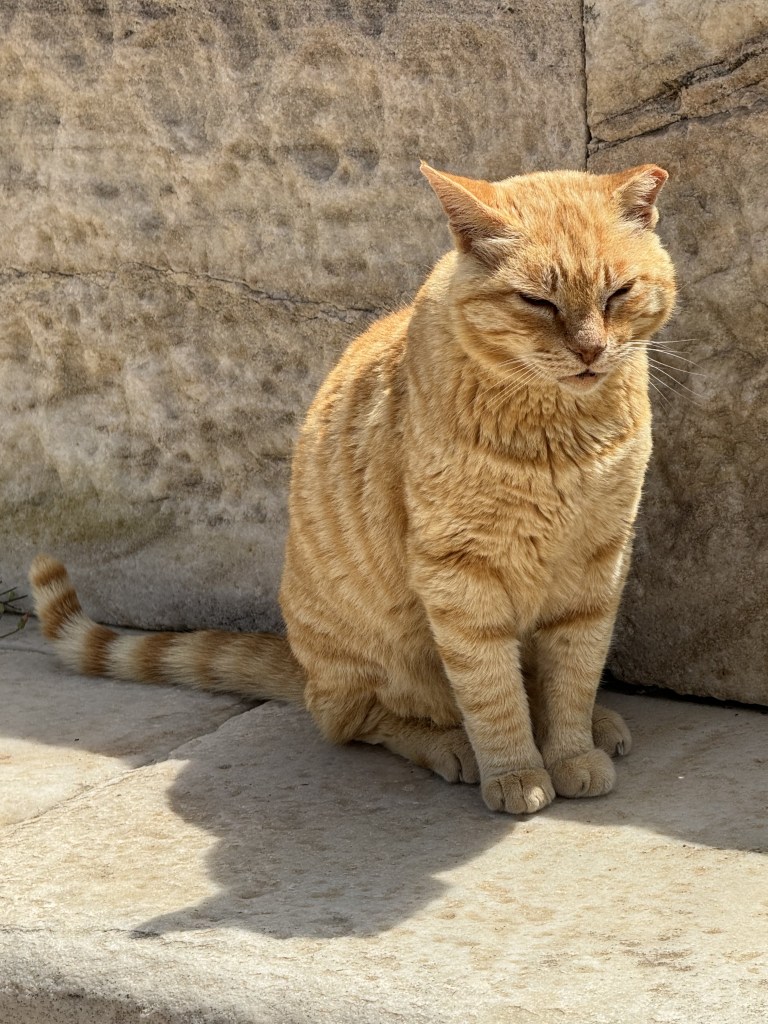
Our first stop wasn’t at some jaw-dropping landmark. It was at a Rhodes version of a highway rest area: a funky little convenience store chock full of free-range cats, which I think must be the national wildlife of Greece. Next to the store, pristine restroom facilities. The idea was to give travelers a break ahead of our drive.
It also brought the second of many times that our guide for the day made me laugh out loud.
The first time was when we pulled out of the harbor and she introduced herself.
“Most of you have seen the movie, ‘My Big Fat Greek Wedding,’ and maybe you remember the name of the Greek family in that movie. It was ‘Portokalis.’ In Greek, portokalis is a word that means ‘orange.’
“Well, my name is Portokalania–don’t ask me why. Maybe my parents wanted to play a joke on me. Maybe they thought it was a funny name, but my name means ‘orange.’ It has gotten me a lot of nicknames, like ‘Miss Orange,’ ‘Orangina,’ ‘Big Orange.’
True story.
The second time she made me laugh out loud was what she said to a fellow traveler at the public restroom facilities. After she’d explained that a 1-euro coin was required to access a toilet. He was a retirement-age looking American man with a midwestern accent, and as we walked past him and Portokalania, I heard him say, “Um, we haven’t had a chance to convert any of our money into euros yet, so that means we can’t access the toilets, right? Can you change money for us?”
She said–with a stern and steady look directly at the man–what I tend to assume the rest of us are thinking when we overhear something like that. “You are in Europe. Euros are the currency in Europe. It is your responsibility to get the money you need to use in Europe, the place you are visiting.”
I wanted to look at his face, but I knew that would be tacky. I just chuckled.
She was, by far, my favorite guide of all the excursions we went on during the cruise. Exceptionally knowledgeable. Inexhaustible energy. Razor-sharp wit.
I could share more examples, but back to the Wonders of the World…
As we, honest-to-goodness, turned off of one highway and onto another in a slightly developed area with a few businesses, I was surprised to hear Portokalania say, “…and that is the place where once stood the Colossus of Rhodes.”
What? Where? I asked and looked around, but the spot was fast disappearing behind us. After being felled by an earthquake, the giant was then on its side for 500-600 years. Until Arab forces raided Rhodes, had the statue broken up and took the bronze to sell for scrap.
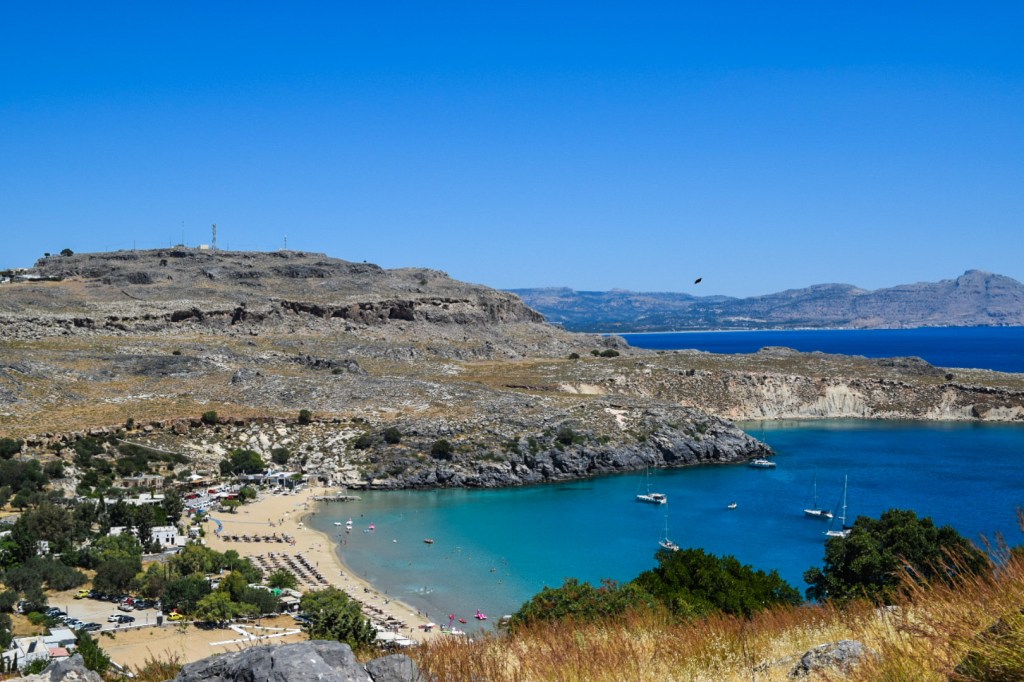
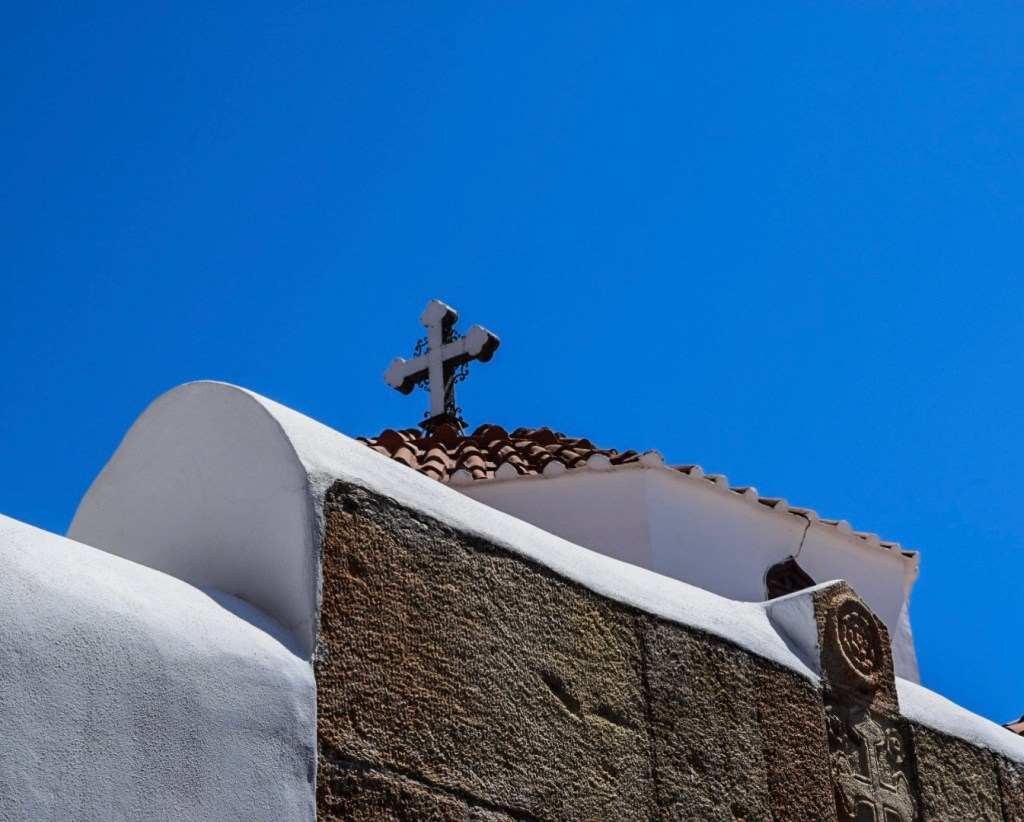
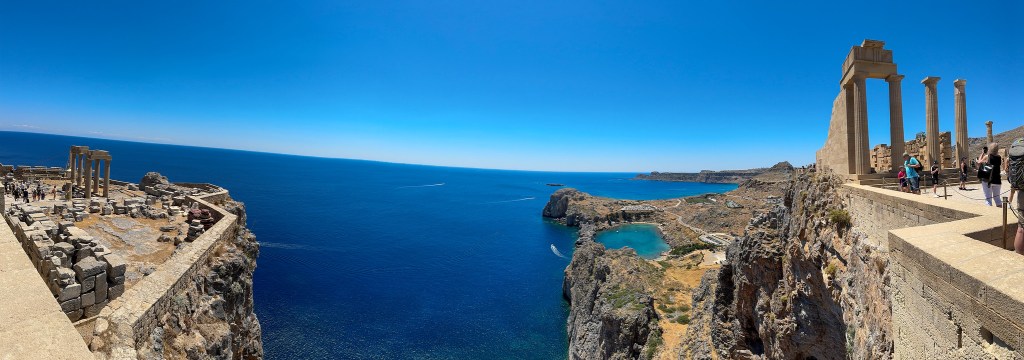
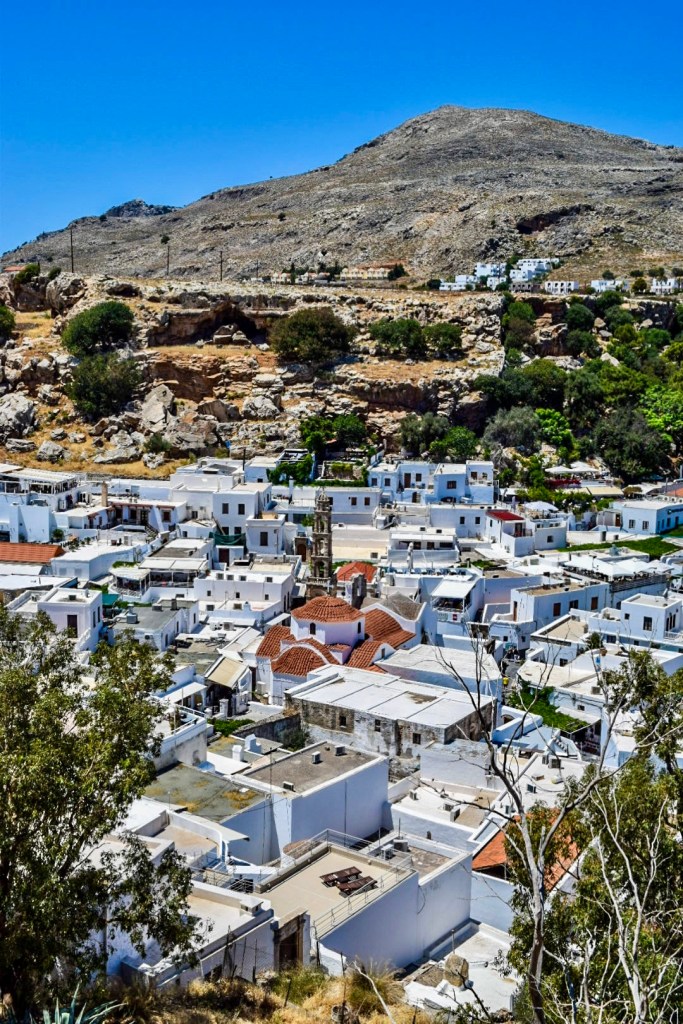
Next stop Lindos, a pretty-as-a-picture hilltop fishing village overlooking St. Paul’s Bay–so named for a believed connection to the apostle. In 51 AD, Paul is said to have sailed in to this bay to preach Christianity for the first time to people of the area.
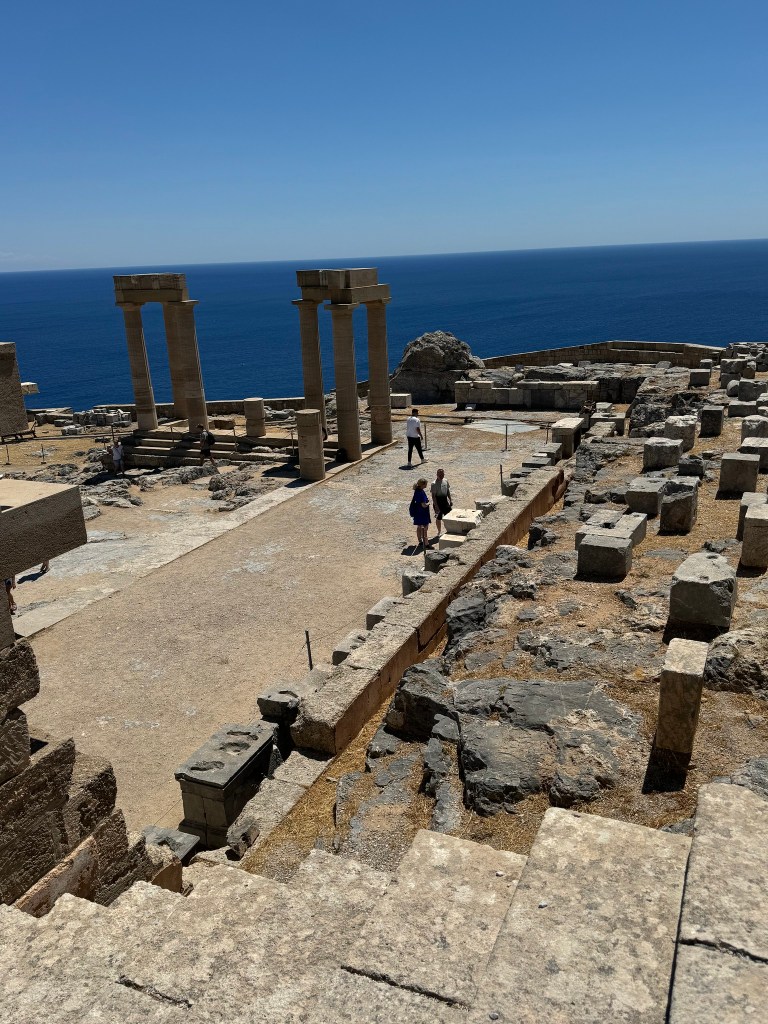
Overlooking the turquoise bay is the Acropolis of Lindos, acropolis being a Greek word often used to refer to a citadel site perched at the highest point of a town.
To reach the Lindos Acropolis, you can make the climb on foot or on the back of a donkey. I managed to get there on my own two feet. Bill took advantage of the shade under a tree at the base of the climb to wait for me to return. He found a nice Greek ice cream sandwich to keep him company.
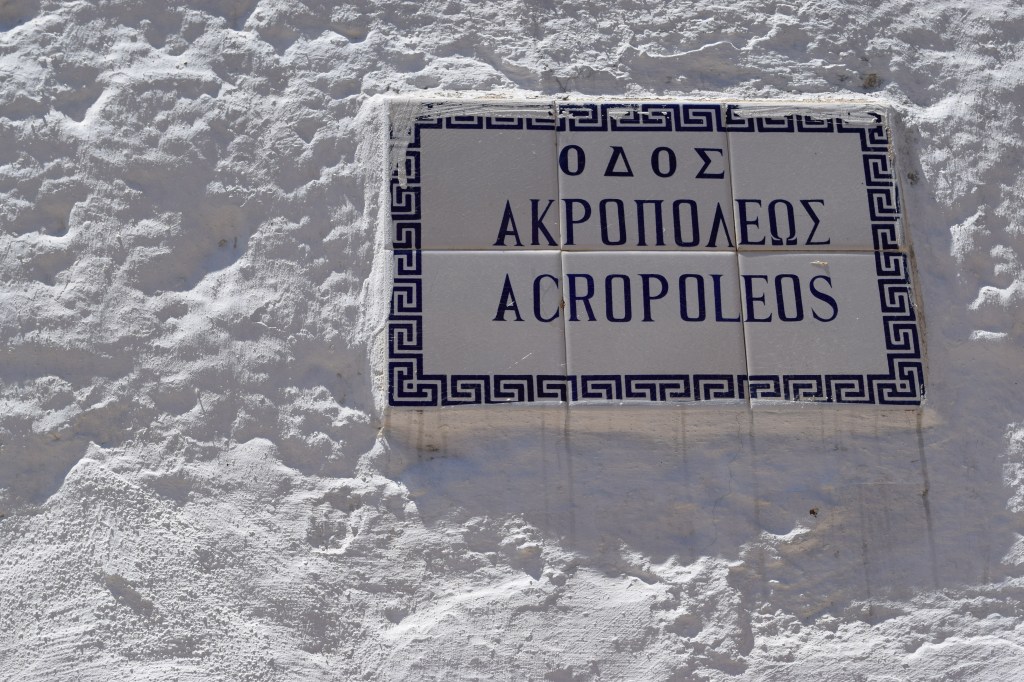
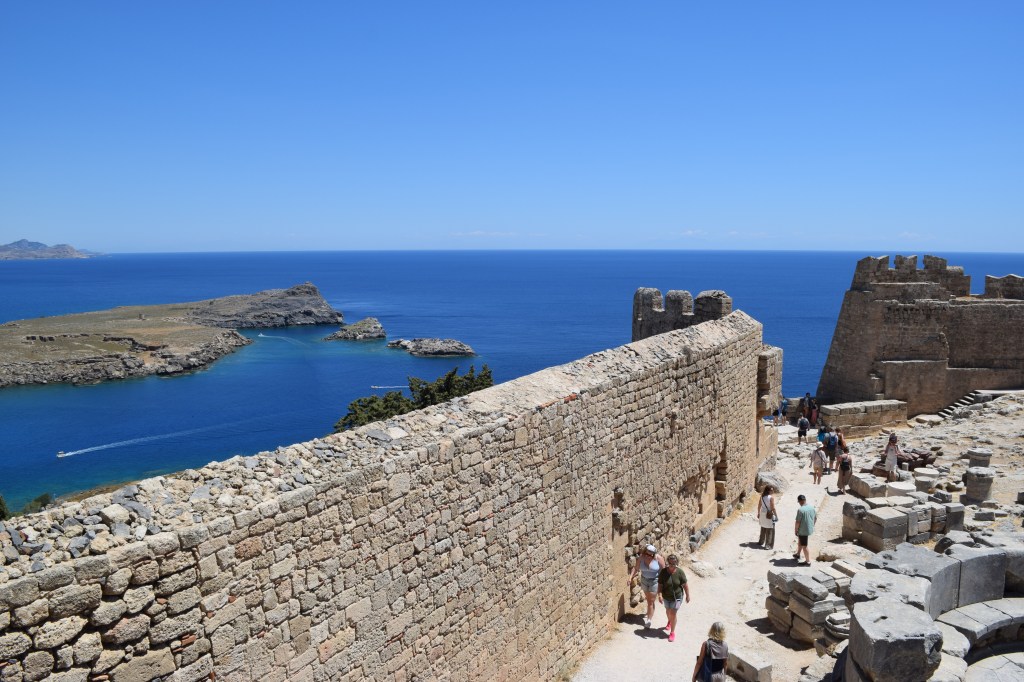
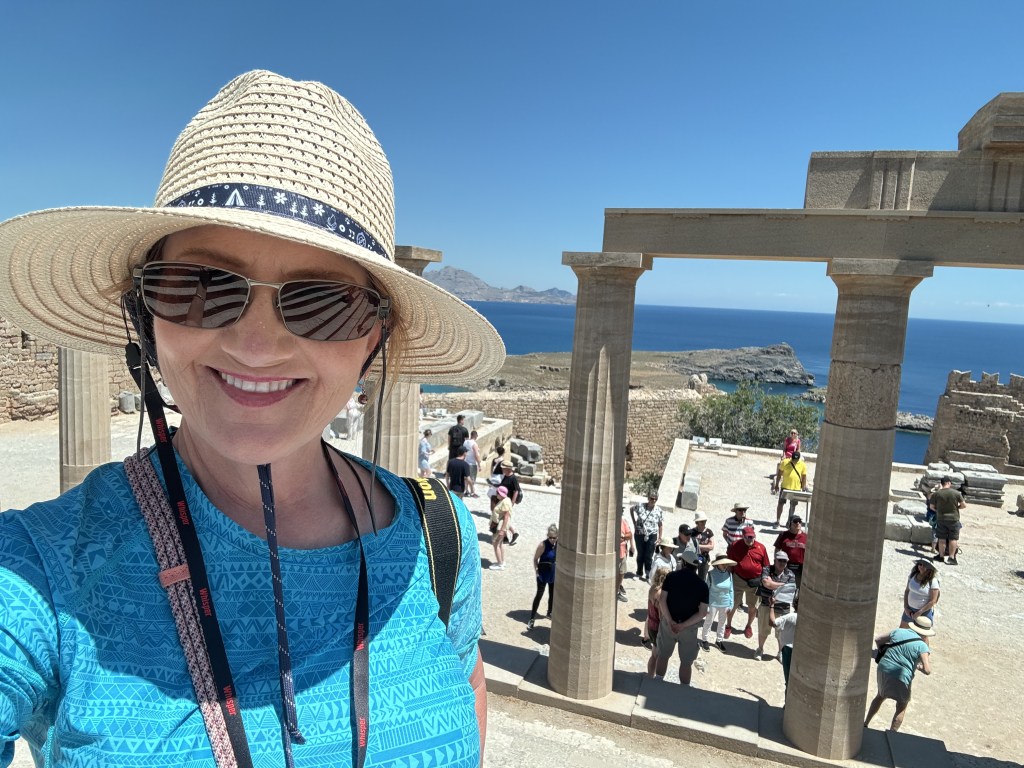

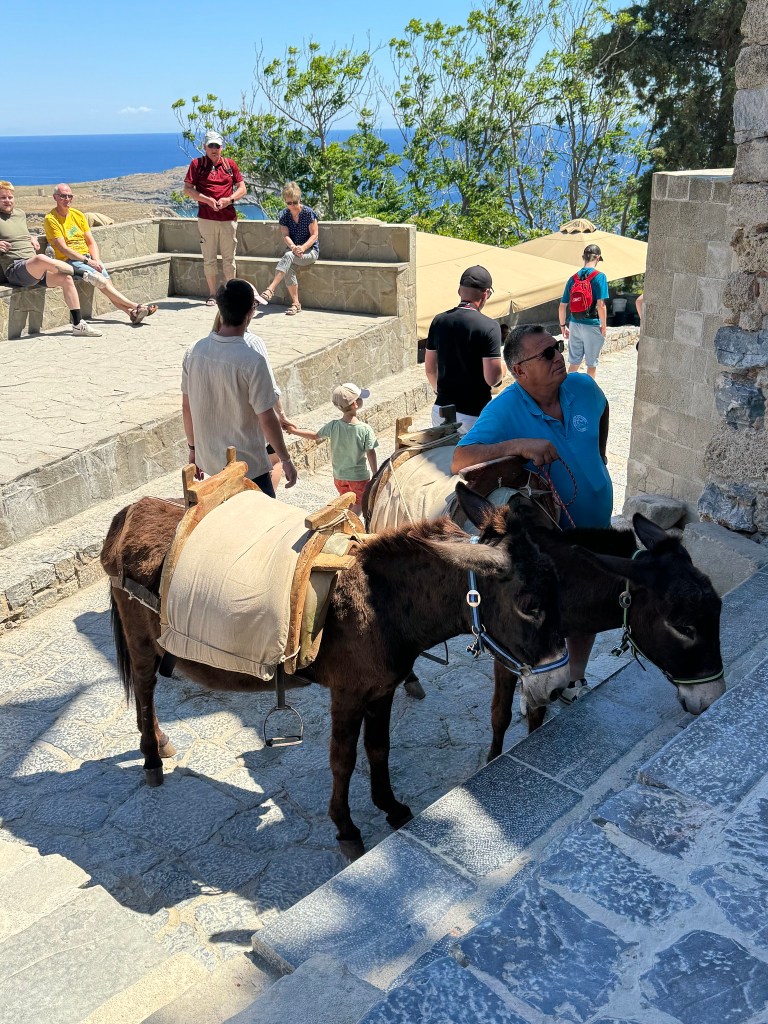
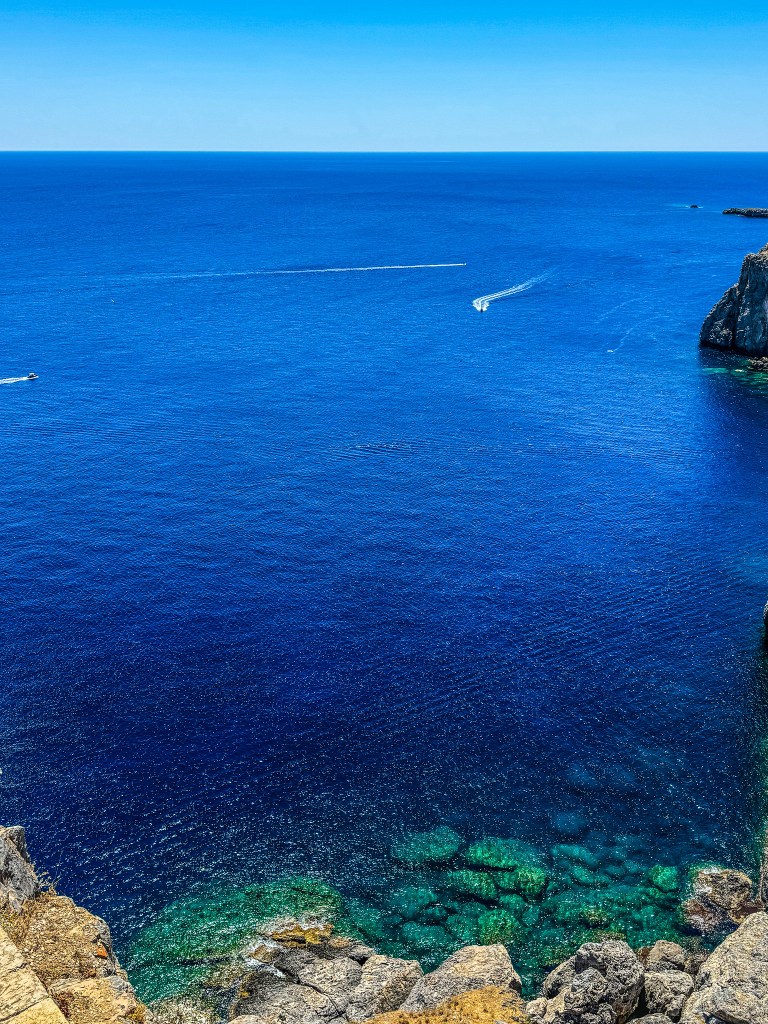
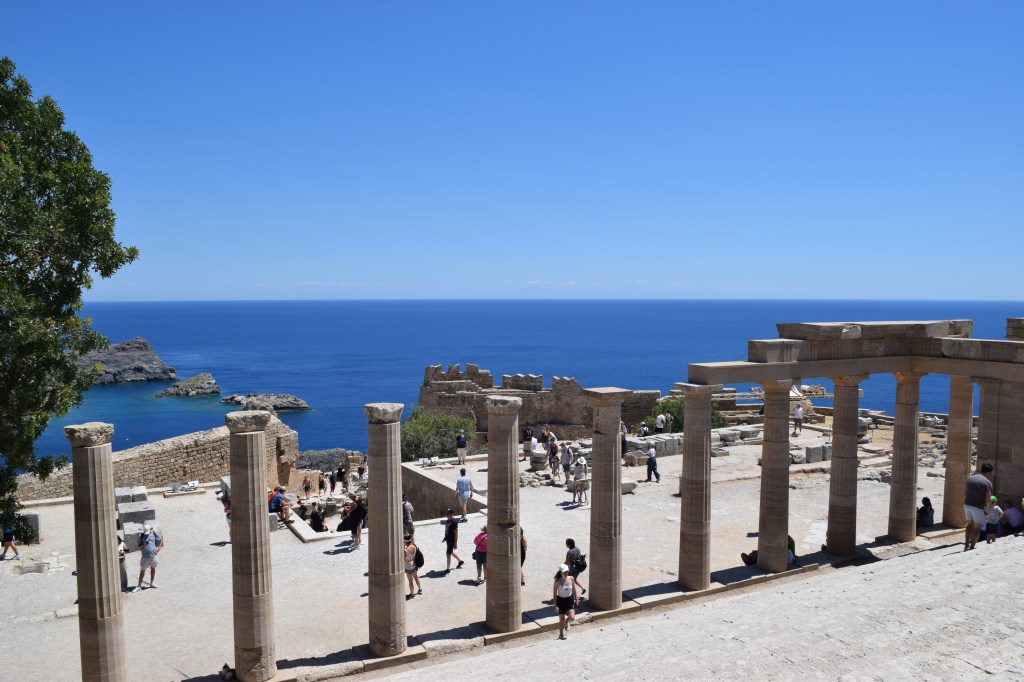
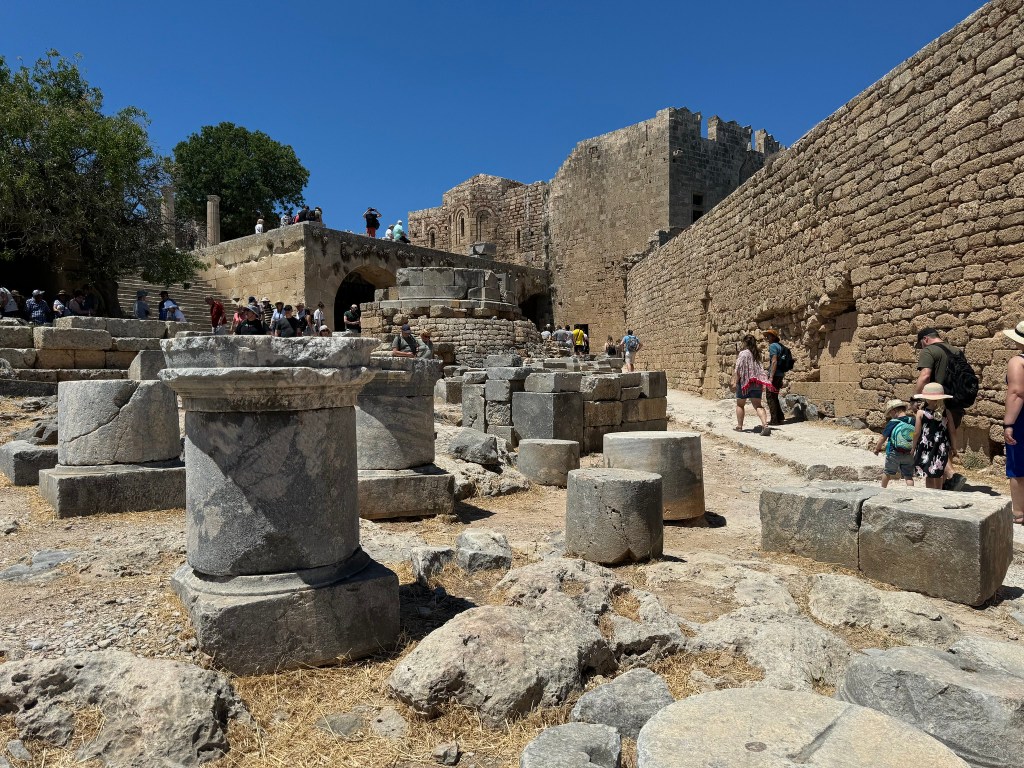
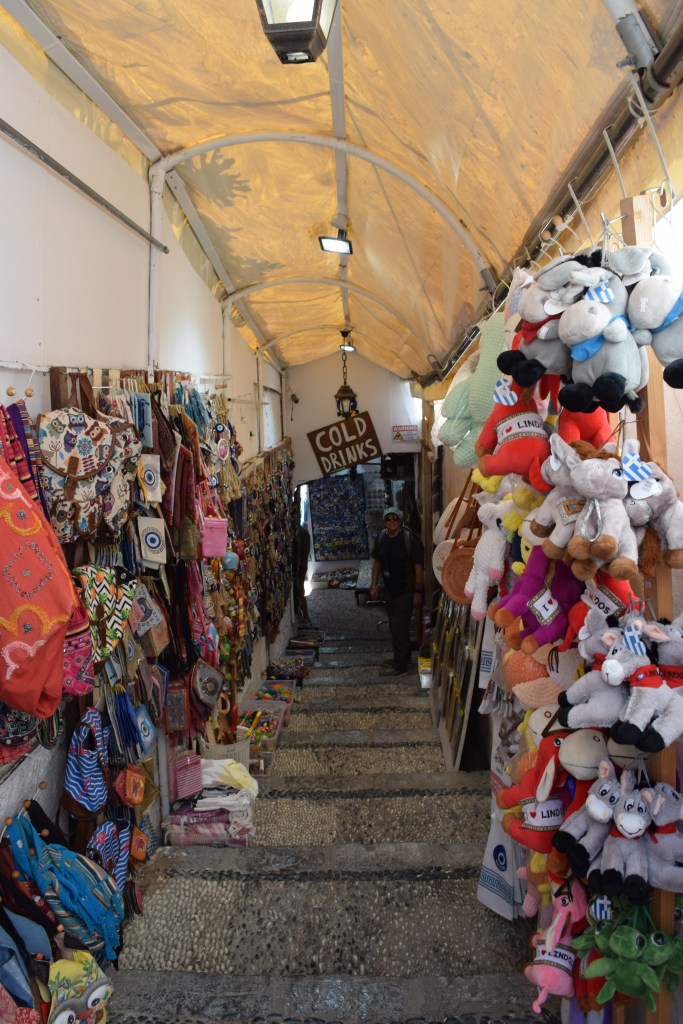

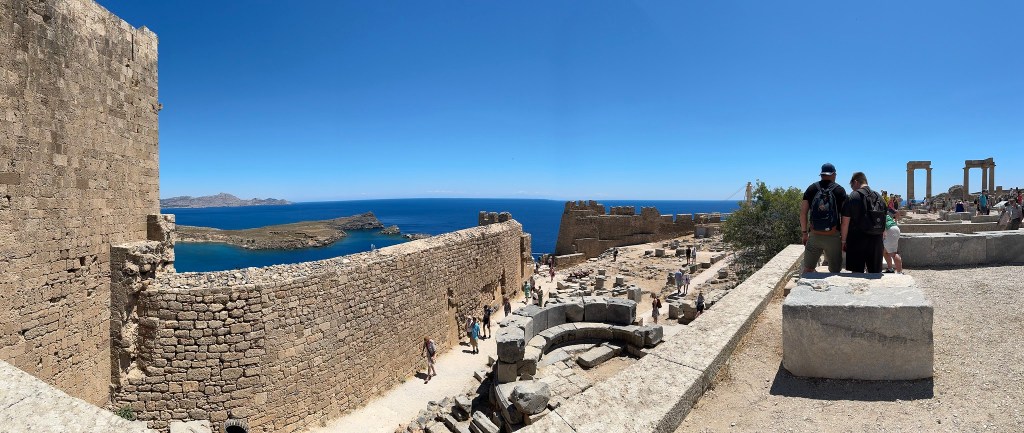
After having our eyes dazzled by Lindos, we boarded for our next stop: Bonis Ceramics. It’s billed as the oldest producer of hand-made pottery on the island of Rhodes. In addition to a store full of beautiful products, the building has a to-die-for view of the Aegean.
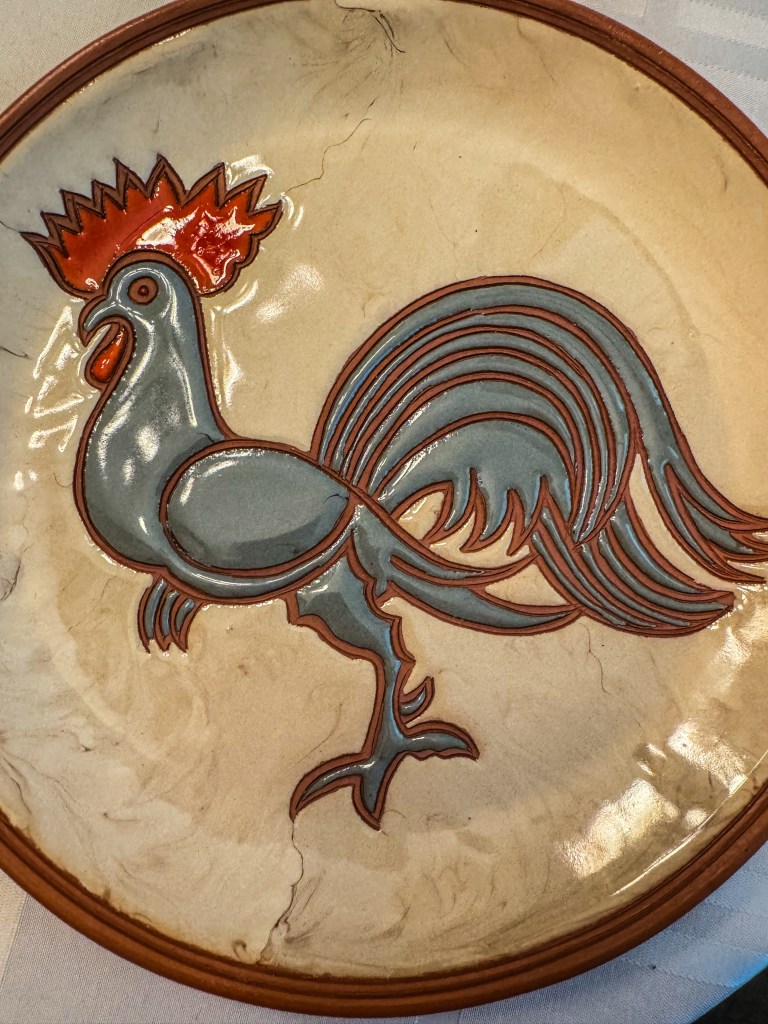


Portokalania scolded me for finding my own ice cream sandwich at the convenience store next to the ceramics shop. She reminded me that we were stopping for lunch next, and that it “will be delicious.” I was counting on that, because I’m not a breakfast eater and the time was approaching 3 p.m. My appetite was too big to spoil with a popsicle.
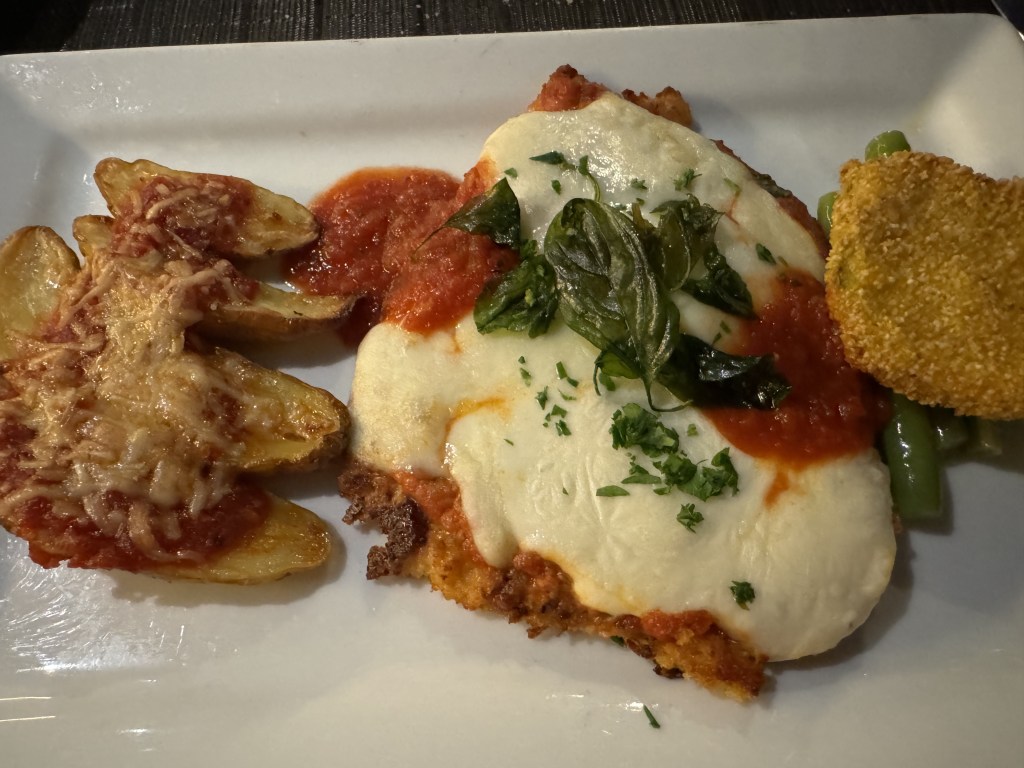
Ten minutes later, we arrived at the very fancy, five-star Leonardo Kolymbia resort and a vast, traditional Greek food buffet enhanced with inventions fusing other cuisines.
Portokalania was right. It was delicious.
Last stop: “Palace of the Grand Master of the Knights of Rhodes.”
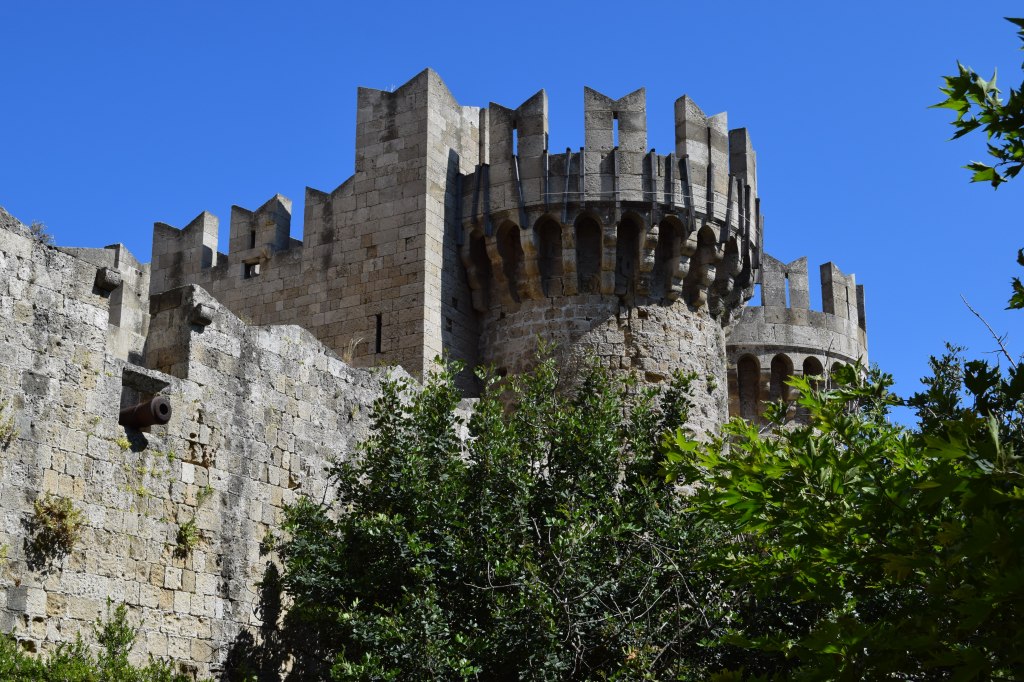
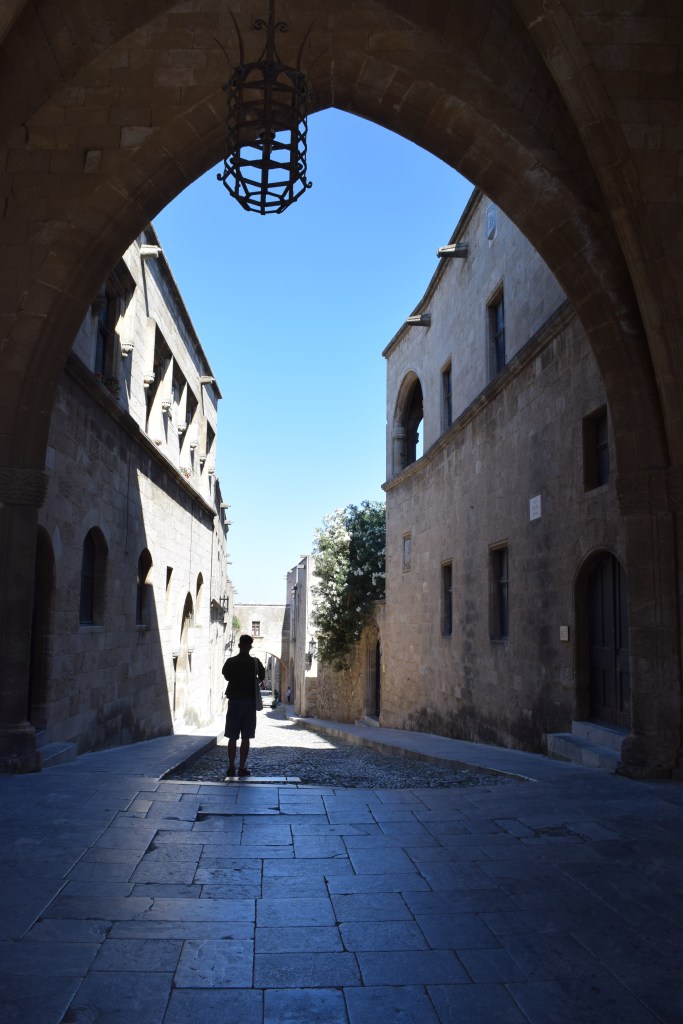
This is a medieval-era complex in the “Old Town” of the town of Rhodes. It was built in the late 7th century as a Byzantine empire citadel.
Which it was. For a while.
As you may know, medieval times were a series of invasions and conquests and rebellions and re-conquests. Portokalania regaled us with the highlights of the various occupiers of this fortress: the Knights Hospitaller, a Catholic order; the Ottomans/Turks and Italians, among them.
Less than even 80 years ago, in 1947, a post-World War II treaty ordered that Italy would transfer Rhodes back to Greece. The palace has been a museum ever since.
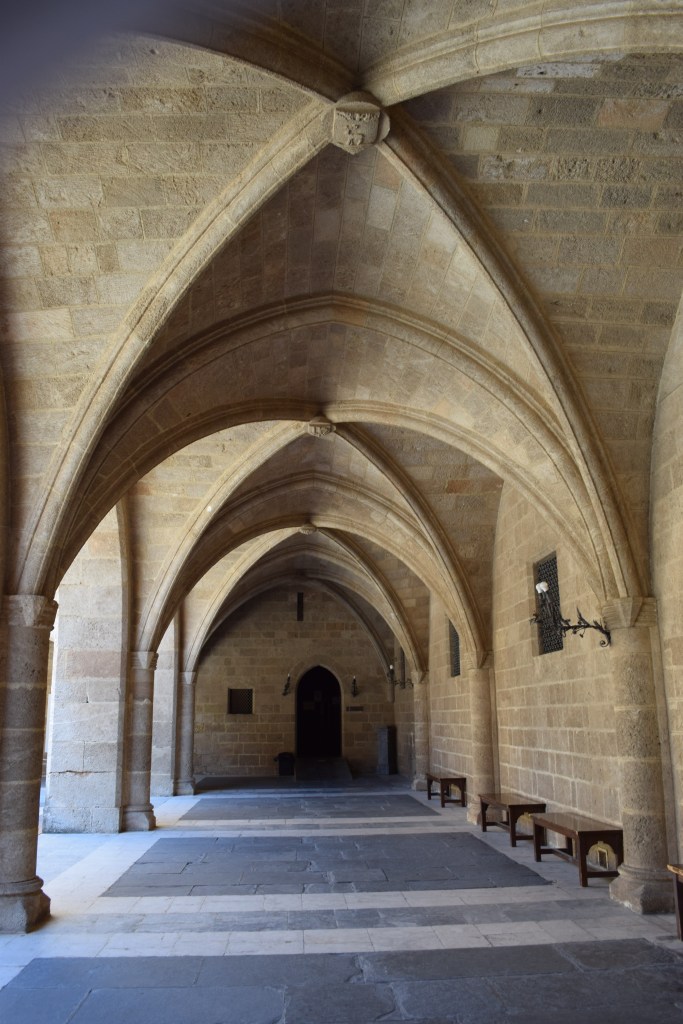

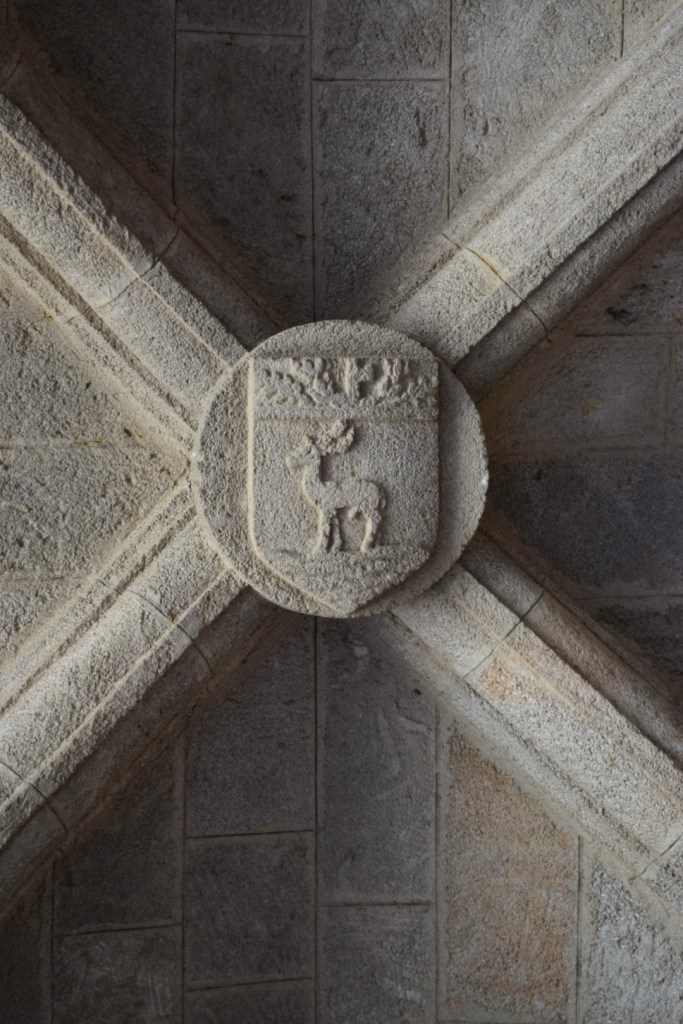
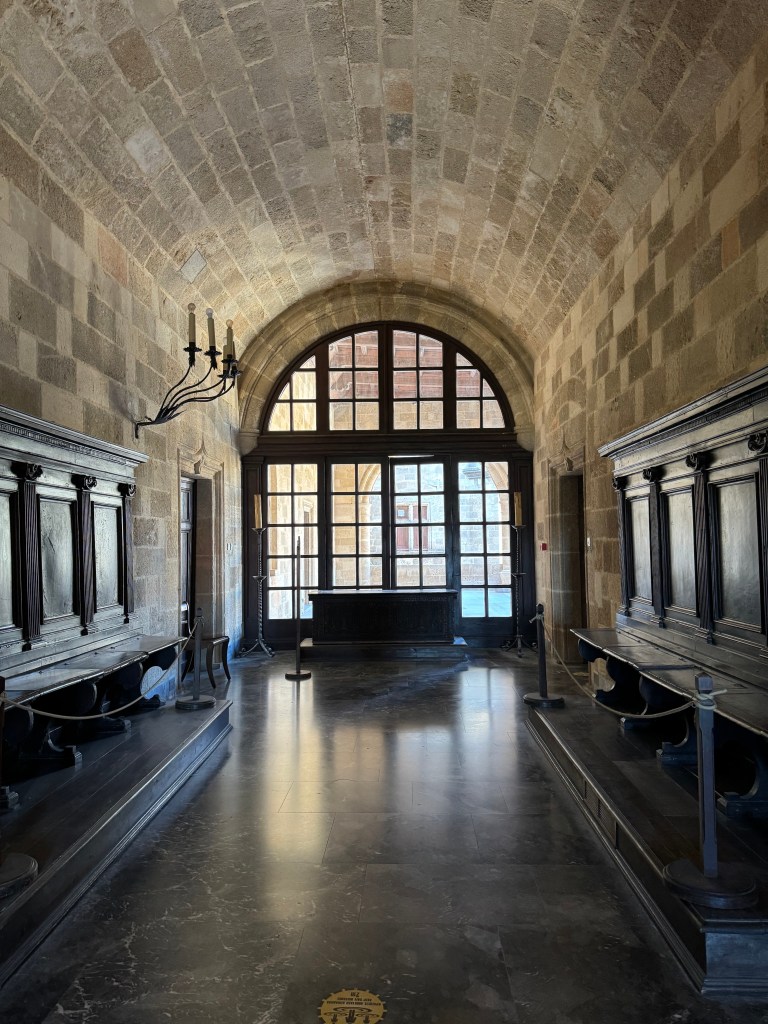
We had a beautiful day getting to and inside it. When the tour ended, I hugged Portokalania–and never called her Big Orange–and thanked her before we walked back to the ship and watched the sun go down.


 wordsandpictures.blog
Leave a comment