Bill and I took the trip of a lifetime in May.
It covered a lot of celebrating: (1) his milestone birthday, (2) our 30th anniversary and (3) my birthday–with all of those made even more special because of some health challenges Bill overcame to enable us to travel.
And did we ever! While we’re not the first people ever to spend 10 days traveling around Greece, the trip was a first and probably an only for us. Which made it even more special.

This post started out as a recap of the trip, but I decided I couldn’t do it justice that way. Since this is the kind of topic where the blog serves as something of a scrapbook for me, please forgive the separate posts for individual parts of our trip.
Now, let me tell you about what we saw and did in Athens. We arrived at 8:30 a.m. local time (seven hours ahead of U.S. eastern time) on Friday morning, May 10, following an 11-hour plane ride from Boston. Our bodies didn’t know what time it was, only that we were missing a whole lot of sleep. Nothing to do but check the bags at the hotel–followed by a shot of rocket fuel called “Freddo,” or Greek cappucino–and hit the streets.
It didn’t take long to run in to the Greek Parliament building, an historic Greek Orthodox Church, the National Garden and Hadrian’s Arch. That’s Hadrian, as in the Roman emperor from 117-138 AD.


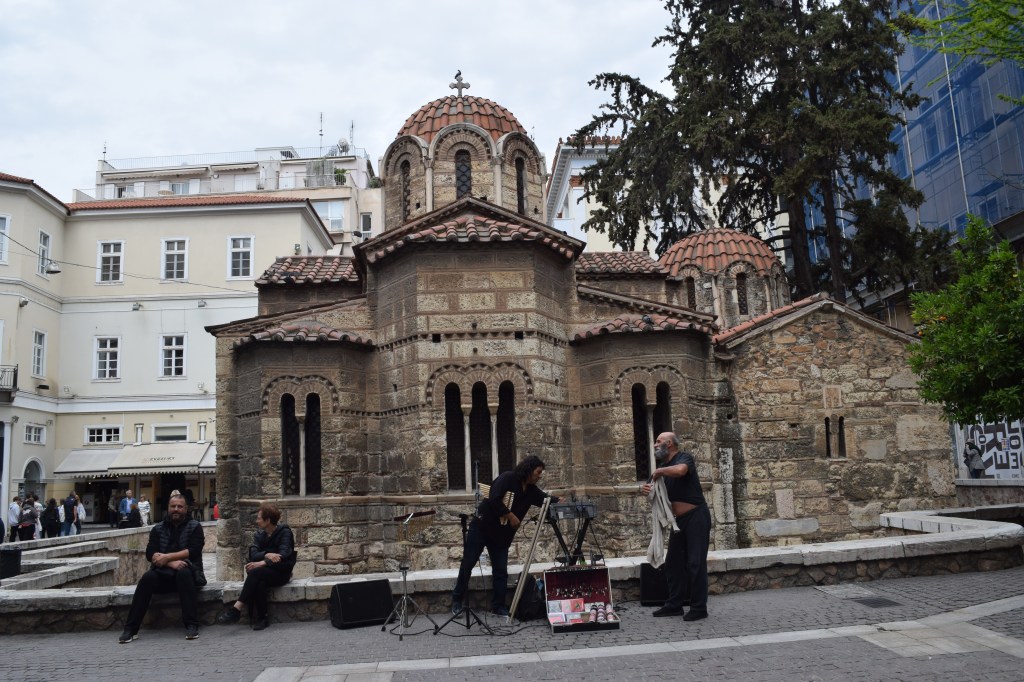
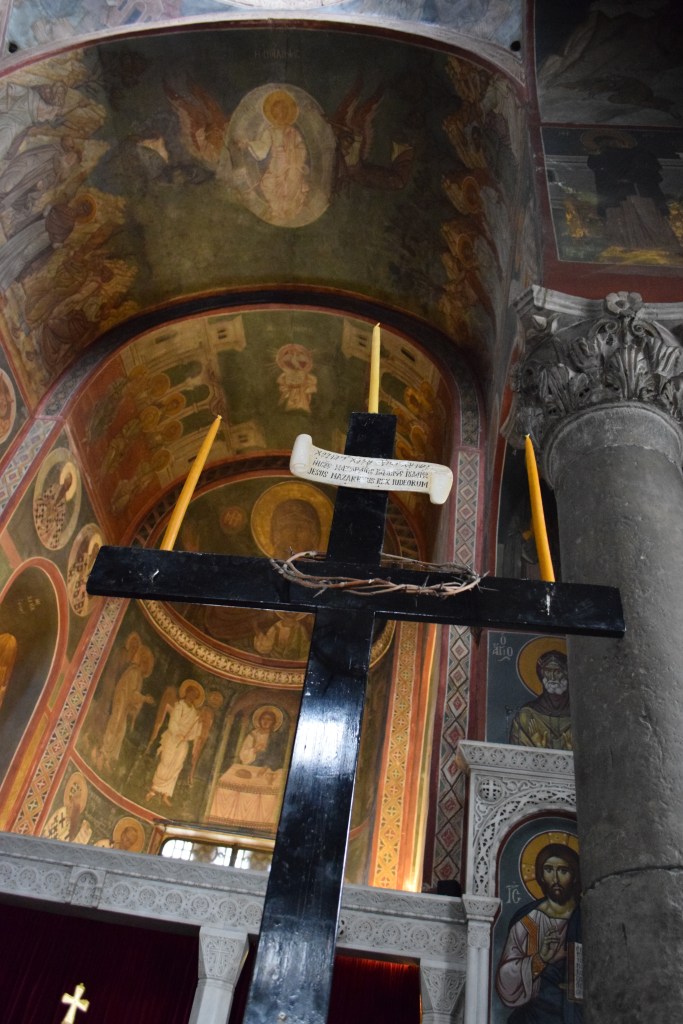
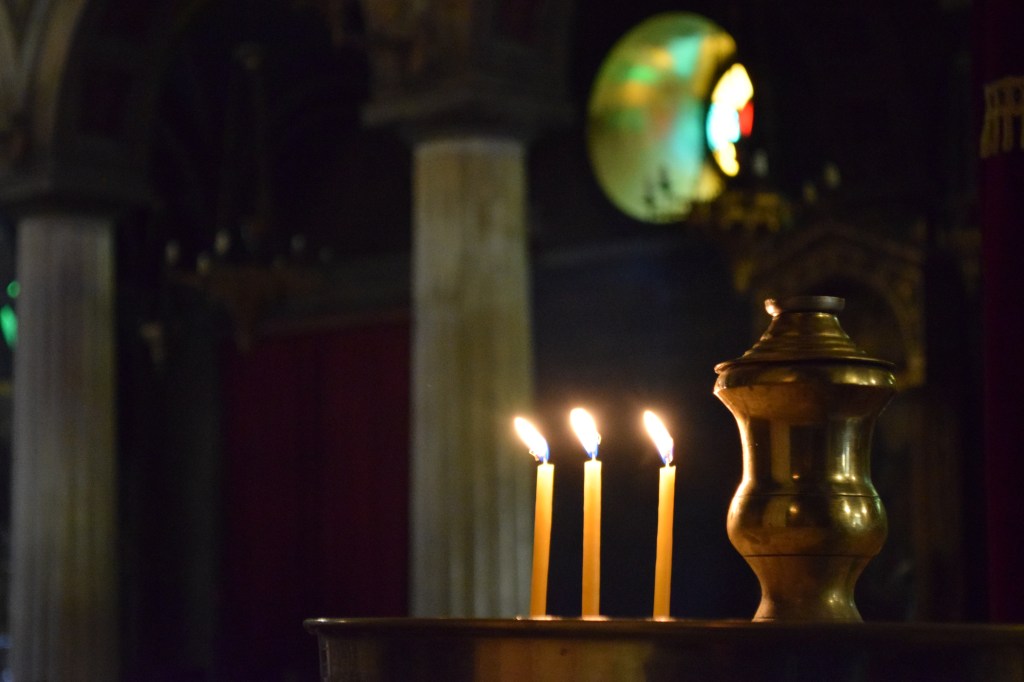


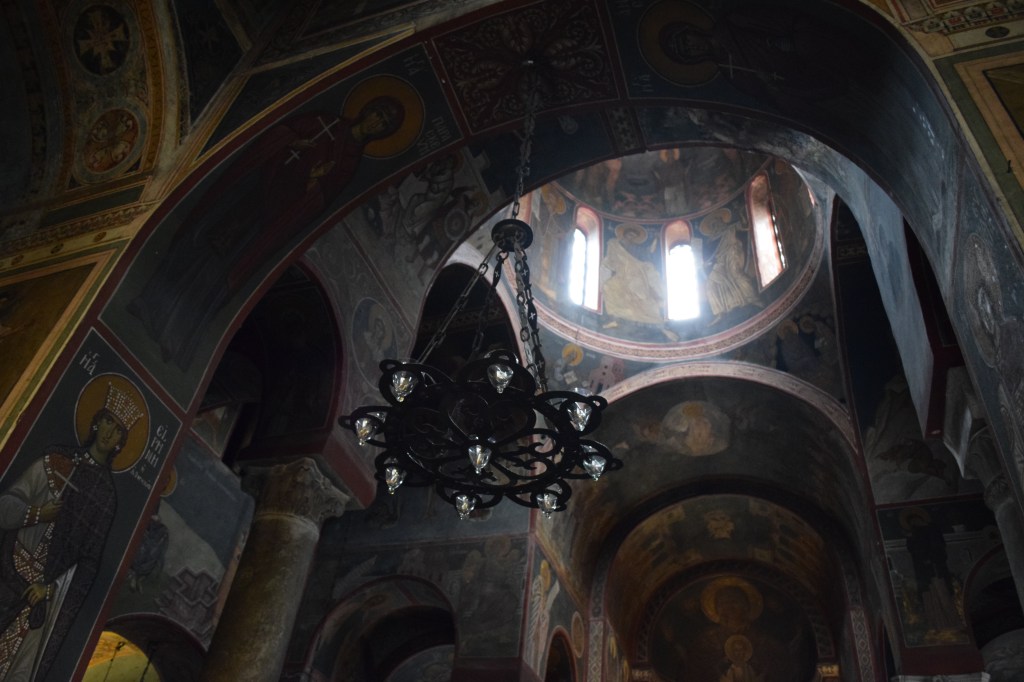


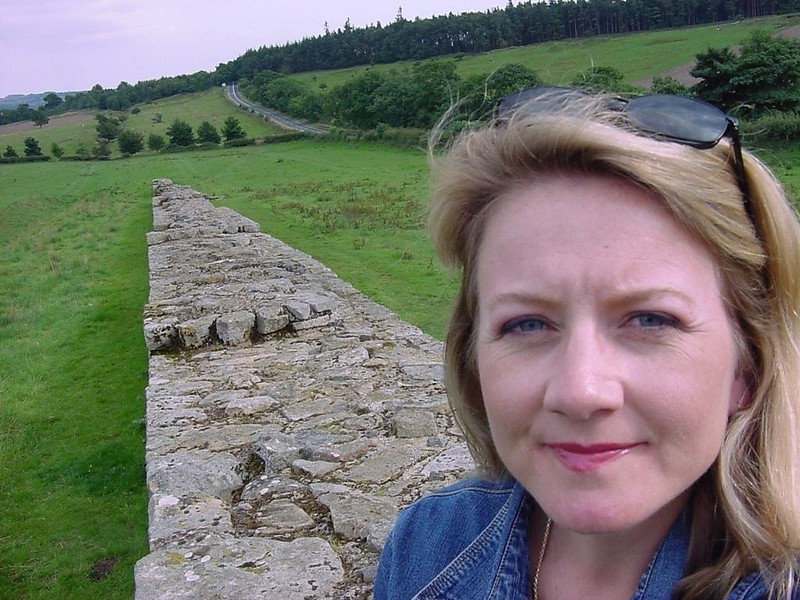
We were kind of blown away to be staring at Hadrian’s Arch, since we got to see part of Hadrian’s Wall in Scotland about 20 years ago and 2,300 miles away. The wall, you may know, marked the northern boundary of the Roman Empire and was to cut off the “Barbarians” to the north in Scotland.

Day 2: Lycabettus Hill
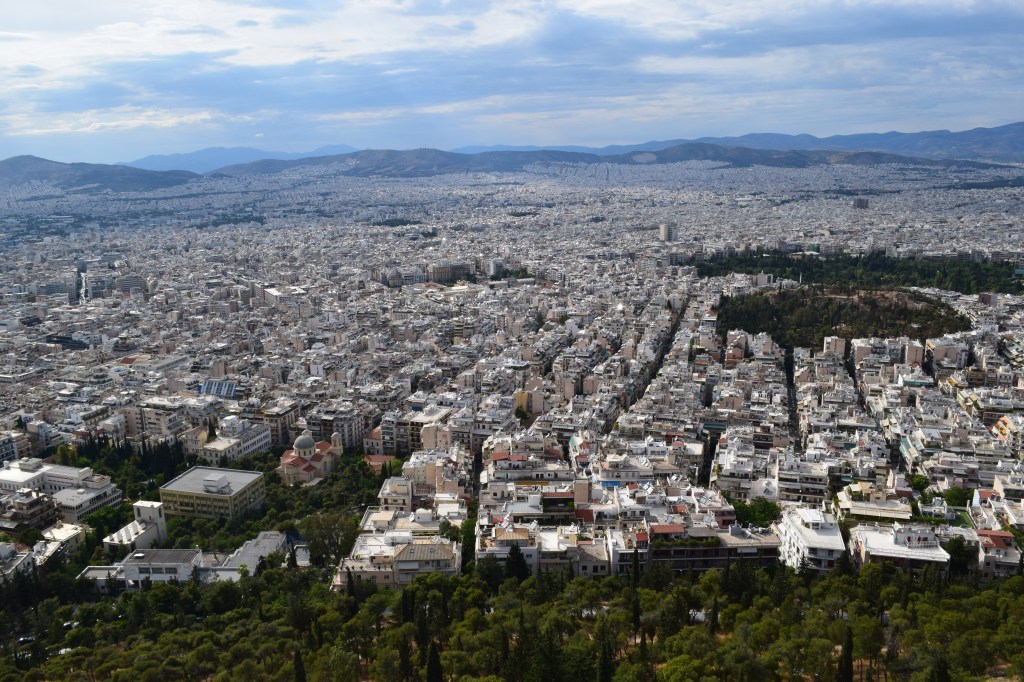
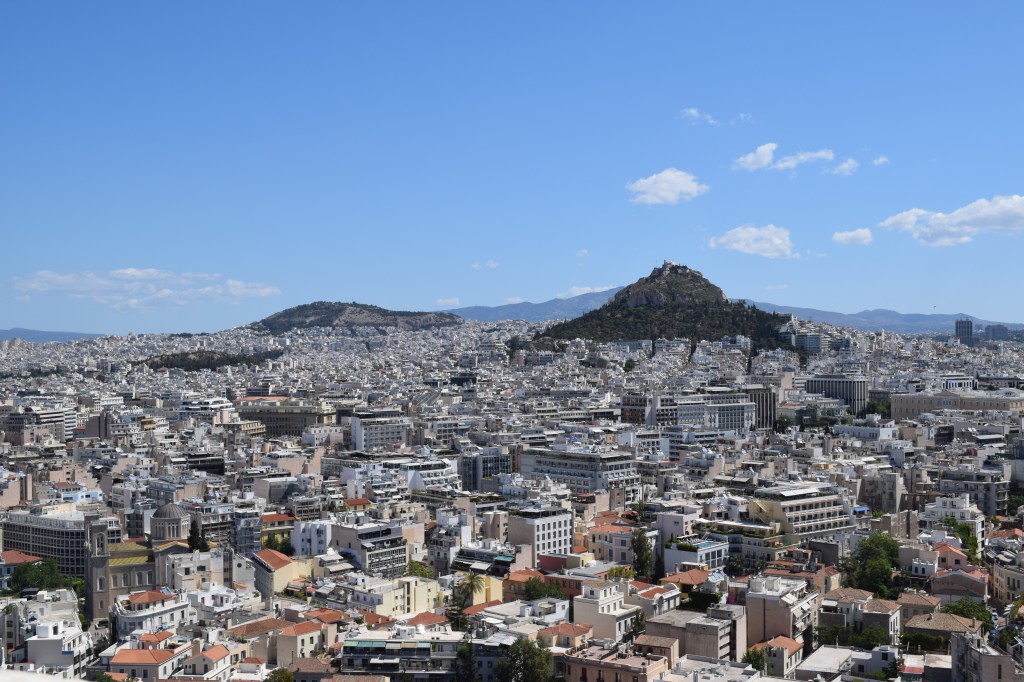
Legend says Athena reacted to bad news from a raven by throwing down a rock she intended for the Parthenon, and that rock today is Lycabettus, the highest hill in Athens. From Syntagma Square, home of the Parliament Building just outside our hotel, the peak of Lycabettus is about a mile on foot with about 500′ elevation gain.
At the first uphill climb through trees and switchbacks, Bill peeled off to take a rest break–he had just completed 38 radiation treatments only three weeks earlier, after all.
We ran into each other again at the base of the last climb, a wide concrete walkway with a handrail for safety against the steep drop off. I asked Bill how he had made it there before me and without my seeing him. By flagging down a taxi, of course, to drive him up the twists and turns of a nearby road that played out at the entrance to a parking area next to an outdoor amphitheater just below the Lycabettus peak.
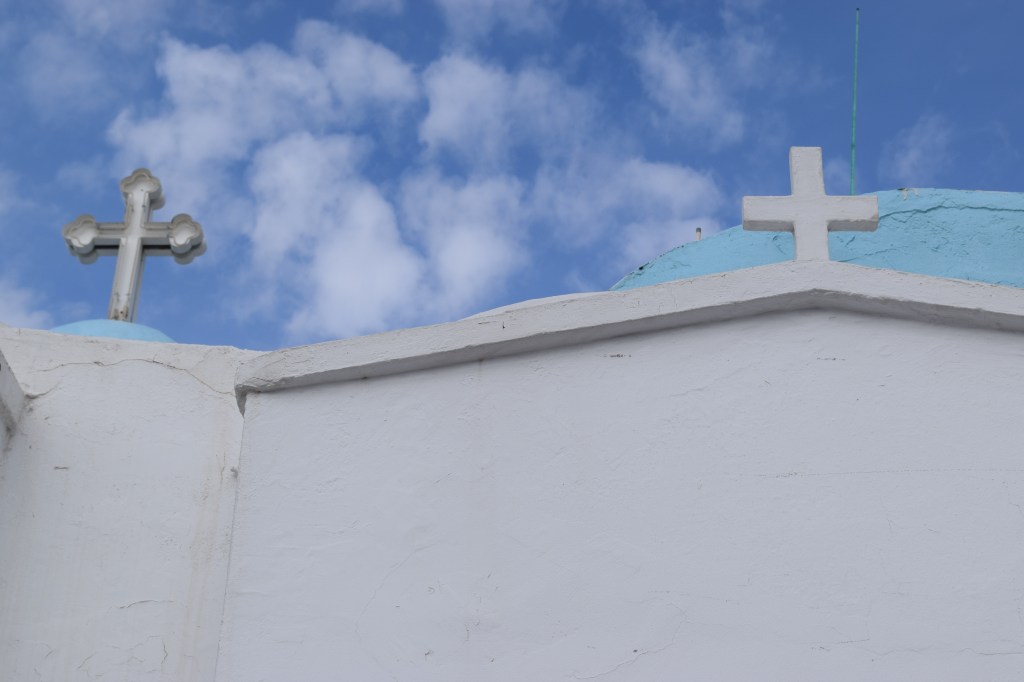
We reached the top together and were rewarded with stunning, 360-degree views of the city of Athens. There’s a beautiful Greek Orthodox chapel there and a couple of restaurants with bars. We sat down at one of them to take in the view, some traditional Greek stuffed grape leaves (dolmas) and soft drinks (“Coke light,” known in the US as diet Coke). The sun was shining, there was a light breeze and the place was beautiful.



Day 3: The Acropolis
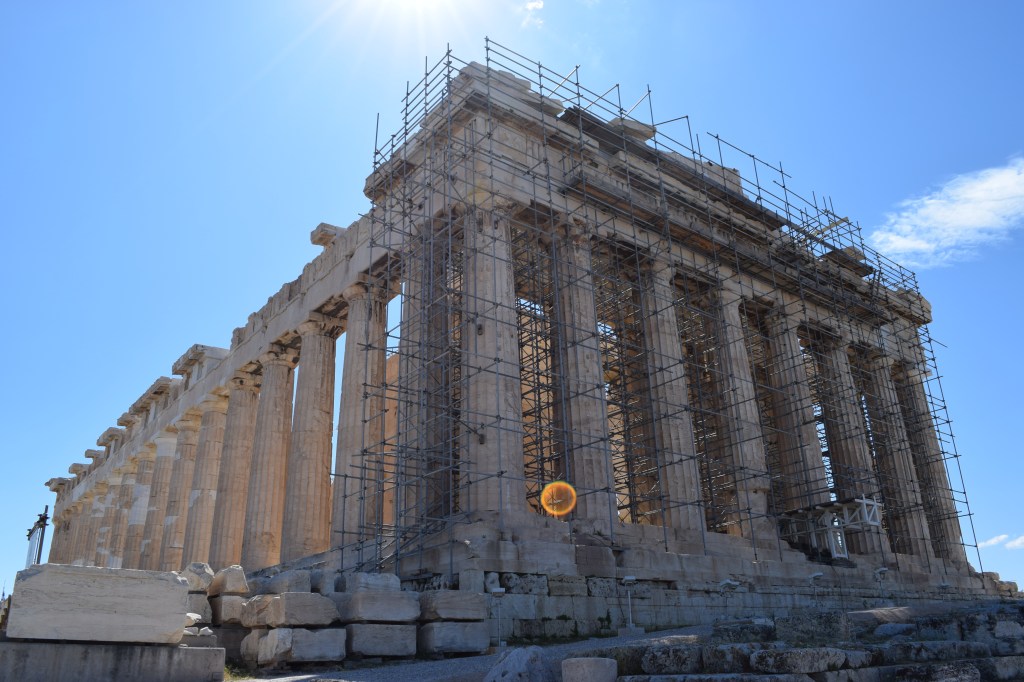
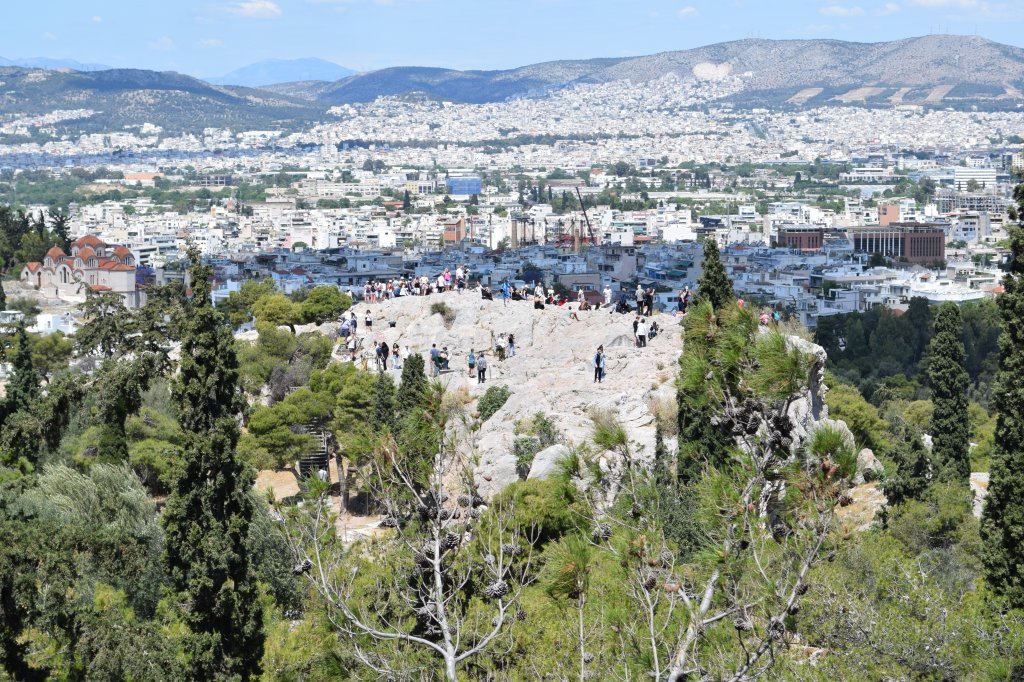
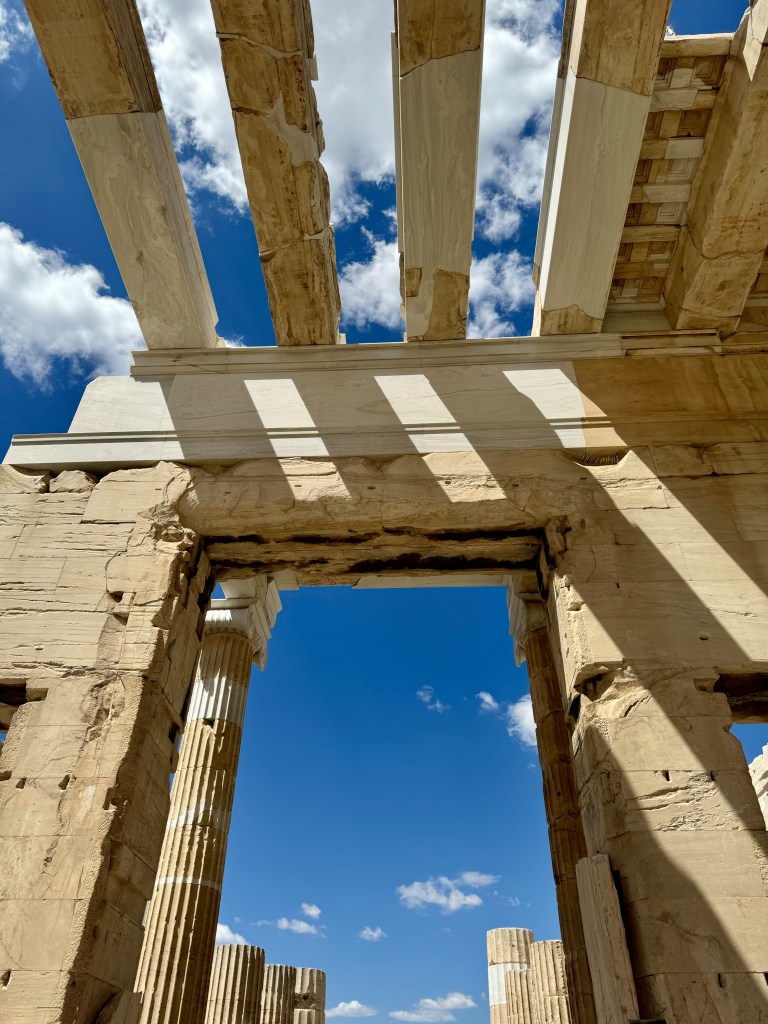
The first Parthenon I ever saw is the replica in Nashville, on a sixth-grade field trip. I have long been one of those people under the impression that the original Parthenon in Athens is one of the most famous ruins in the city, maybe even in all of Greece. It certainly is well-known and important, but we were blown away to visit the original and see that it is a part of a whole collection of stunning ancient buildings, temples, ruins and other massive chunks of marble at “The Acropolis.”
“Acropolis” also is a Greek word meaning “high city,” as I learned. It’s a fitting description and a good name for the rocky perch overlooking Athens that is home to some of the most important man-made landmarks in ancient history.
We booked a guided walking tour weeks before the trip, and that turned out to be a good decision. Visiting the Acropolis takes time and is somewhat strenuous, since 3+ miles walking is a minimum and the only real way to access the site. It was great to have a knowledgeable expert bringing to life all of what we we saw. The weather was postcard-perfect, and the tour wrapped up with a visit to the nearby Acropolis Museum which, in itself, is the kind of place where I could have spent hours, ordinarily. As it was, we were pretty tired and jet lag was catching up. We took another Freddo hit in the museum cafe and were good to go for the walk back to the hotel.




Day 4: Olympic Stadium
Technically, this one is called “Panathenaic Stadium,” and it is the original.
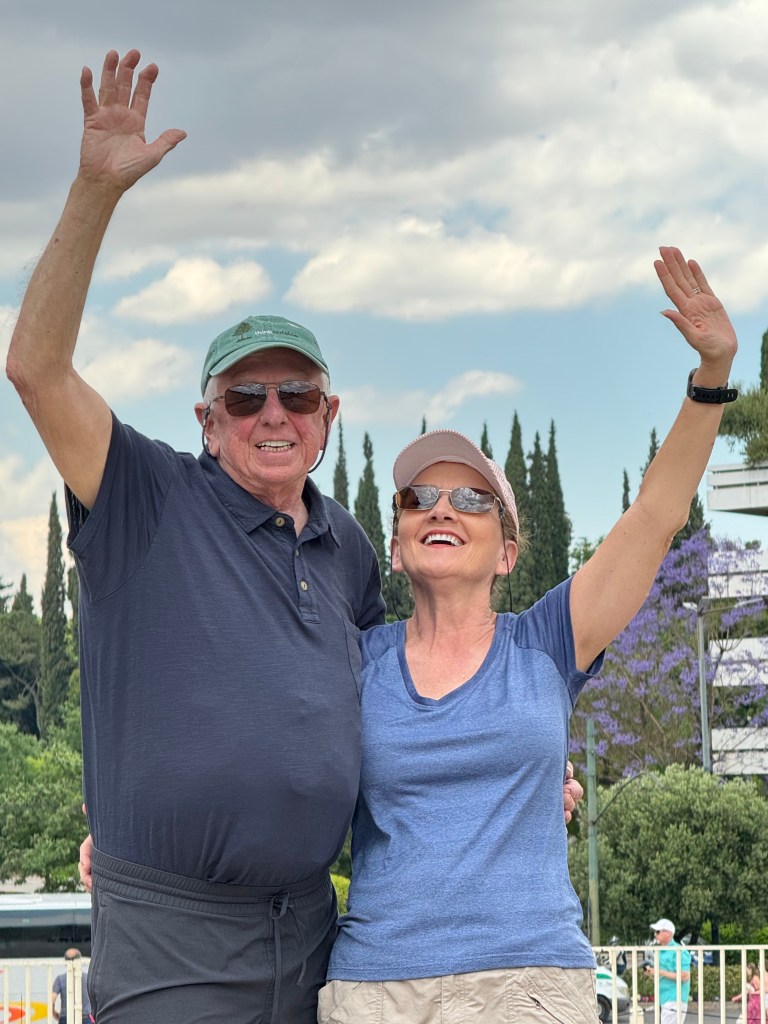


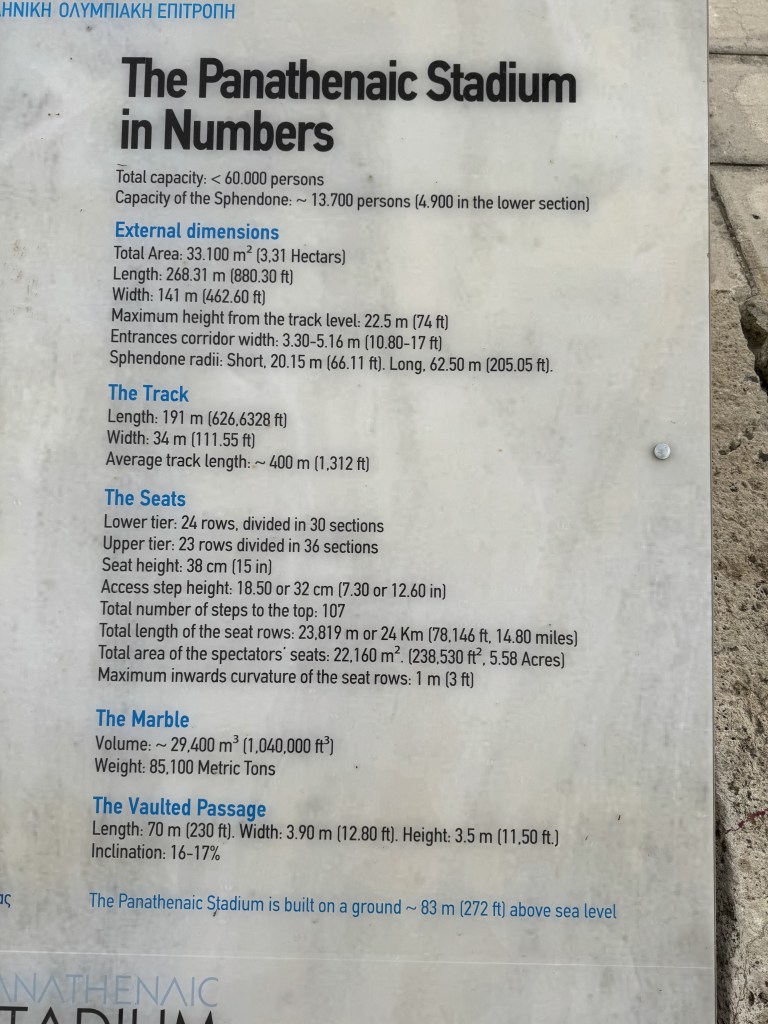


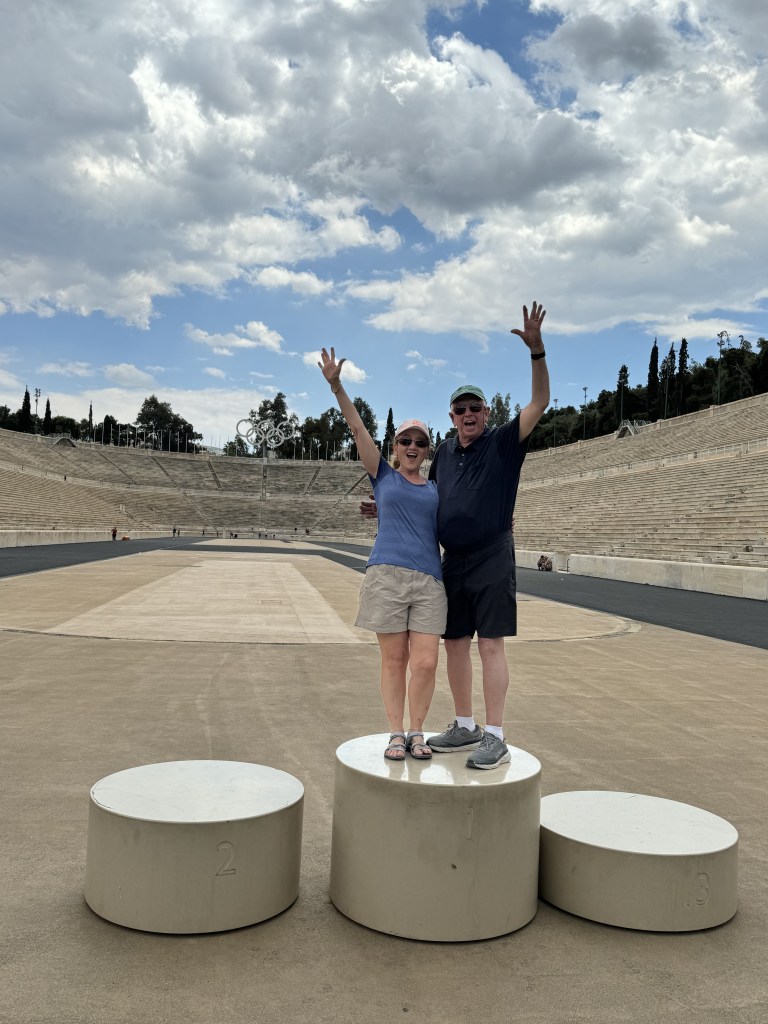

Very–like it is the original, first built in 330-329 BC. In another 200 years, from 143-140 BC, it was rebuilt and given the name “Great Panathenaea” stadium. Believe it or not, the site was abandoned over the next 1,000 years or so and by the time there was interest in trying to find it, doing so required digging. Literally.
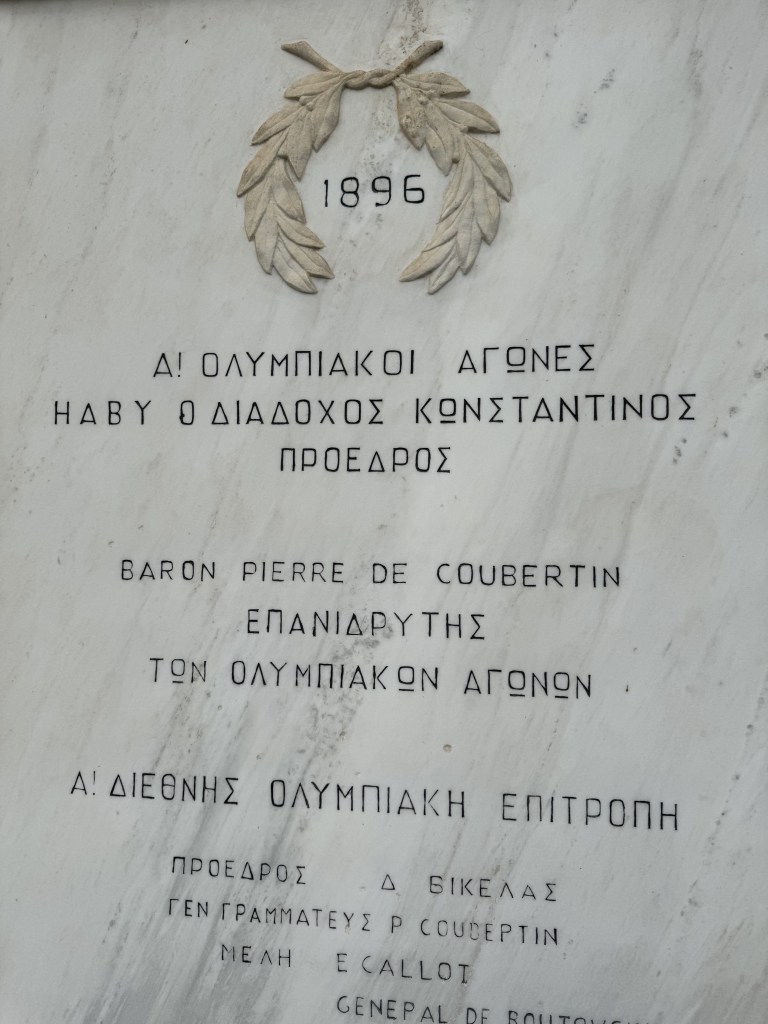
A massive excavation in 1869-1870 revealed where the field of competition had been, surrounded by spectator seating. International interest in reviving the Olympic games led to renovation of the stadium site, complete with marble seating and statues; and an impressive entry tunnel through the marble structure and onto the field and oval track for athletes. All finished in time for the very first Olympic games of the modern era, in 1896.
Our time in Athens wouldn’t have been complete without touring that incredible site, climbing the marble-stepped bleachers and listening for the ghosts of medal winners who’d blazed around that track.
We also learned there that Greeks are responsible for one of the most basic principles of good sportsmanship: that you do your best in competition and congratulate the winner, no matter who wins. Also, even if you and your competitor might be suiting up in armor again to resume battle in a war you were fighting on opposing sides, you set that aside in competition and just run your race.
Steeped in history and lofty ideals, we headed back on the 1 mile or so walk to our hotel. Athens decided to show us a little bit of rain on this day before we would hop on a cruise ship. We were trekking through the National Garden, a fully public arboretum and park, when we spotted a potential shelter from the light shower–a thick vine arbor overhanging a gravel path punctuated by an occasional park bench.
The vine turned out to be honeysuckle. Thick and almost impenetrable–evidenced by no longer being sprinkled by rain–and at absolutely peak fragrance.
I grew up in the country and have driven, bicycled or walked past miles of honeysuckle-covered trees and fences, but never in my life have I been in a sea of scent like that.
I only wish I’d had some of way of capturing that scent to take with me. On the other hand, we took so many incredible memories from our time in Athens with us, it would be greedy to ask for more.

 wordsandpictures.blog
Leave a comment